Skip to content

13 August, 2026

  • Saved Articles
  • My Account
  • Subscribe
  • Log In
  • Log Out

Board Agenda

  • Governance
  • Strategy
  • Risk
  • Ethics
  • News
  • Insight
    • Categories

      • View all
      • Governance
      • Strategy
      • Risk
      • Ethics
      • Board expertise
      • Finance
      • Technology
    • board skills clash

      When board skills clash

      Board composition in terms of expertise has a clear impact on entrepreneurial decision-making and strategy,...

      create value

      4 ways to help your CFO create value

      The chief financial officer has a vital contribution to make to the board’s strategy on...

      leadership crisis

      How to fix the leadership crisis

      Unpopular opinion? It’s time for organisations to shift away from feelings to focus on competency...

  • Comment
      • View all
    • create value

      4 ways to help your CFO create value

      The chief financial officer has a vital contribution to make to the board’s strategy on...

      leadership crisis

      How to fix the leadership crisis

      Unpopular opinion? It’s time for organisations to shift away from feelings to focus on competency...

      AI behaviour

      How do you measure AI adoption?

      It’s easy to produce metrics on AI software deployment, but these are pointless without tracking...

  • Interviews
      • View All Interviews
      • Podcasts
      • Webinars
    • governance

      How better governance helps private companies grow

      If governance is to become mature, management decision-making has no place on the board’s agenda,...

      future-ready

      Is your board ‘future-ready’?

      The survival of a business in uncertain times depends on its ability to pivot as...

      investor confidence

      Lack of audit reform ‘will hit investor confidence’

      Government's failure to push ahead with audit reform is a risk to UK investments, the...

  • Board Careers
      • View All
    • board skills clash

      When board skills clash

      Board composition in terms of expertise has a clear impact on entrepreneurial decision-making and strategy,...

      female ceos

      FTSE 100 CEO appointments rise

      The number of CEO appointments has doubled in six months, although the global picture suggests...

      board role

      How to engage with outreach

      When board opportunities knock, should you answer the door? Here are tips from a new...

  • Resource Centre
      • White Paper Downloads
      • Book Reviews
      • Board Advisory & Corporate Services
    • FRC Annual Review of Audit Quality 2026

      This Financial Reporting Council report uses findings from its supervisory activities to assess audit quality...

      Governance Guide: How Boards Drive Growth

      This Board Agenda Governance Guide investigates how directors can evolve to drive performance and growth...

      Organizational Transformation in the Age of AI

      This World Economic Forum paper looks at how organisations must re-architect their workflows and operating...

  • Events
  • Search by topic
    • Governance
    • Strategy
    • Risk
    • Ethics
    • Regulation
    • ESG
    • Investor Relations
    • Careers
    • Board Expertise
    • finance
    • Technology

Australian parliamentary report slams Rio Tinto board and culture

by Gavin Hinks on December 11, 2020

Investigation concludes the relationship between the Rio Tinto board and CEO was a key factor in the Juukan Gorge scandal.

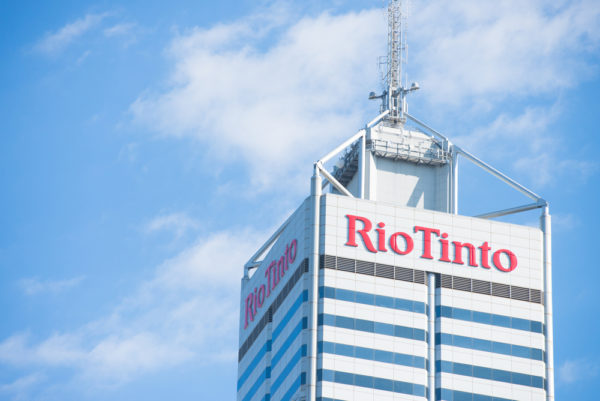
Rio Tinto regional HQ in Perth, Western Australia

Image: Rob Bayer/Shutterstock

Favorite

There’s no way of getting around it. The destruction in May of the Juukan Gorge caves in Pilbara, Australia, by Rio Tinto iron ore workers was an outrage and dug one of the deepest reputational holes of any company in modern times. Chief executive Jean-SĂ©bastien Jacques agreed to hang up his shovel and resign (a rare act of accountability these days) and investigations were launched.

This week a report by the Australian parliament made an emphatic declaration that “the destruction, the devastation and the vandalism of cultural sites as has occurred with the Juukan Gorge” should never happen again. It was “inexcusable”, said the report, and called on Rio Tinto to set about rebuilding the site and compensating the traditional owners of the caves, the Puutu Kunti Kurrama and Pinikura peoples of Western Australia.

But for governance observers it’s worth bearing in mind what the parliamentary report dug up about Rio Tinto’s leadership. While it concludes the destruction had many complex causes, the relationship between the board and the chief executive formed a key problem.

Here’s a passage in the report from senator Dean Smith: “It is my view that those board members involved with the appointment and ongoing performance of Mr Jacques enabled a culture to develop at Rio Tinto where non-executive level management did not feel empowered to inform the executive of the significance of the rock shelters.” Smith also claims there was evidence that “Mr Jacques’ management style created a poor culture at Rio Tinto that was endorsed by the board.”

The report also makes mention of the Australian Financial Review quoting macho comments delivered by Jacques at a Town Hall meeting in Brisbane when asked about his approach to staff. “If someone is stuck in the past
 they can either fit in or f… .off,”  the review reported.

Dispersed leadership

The dispersed nature of Rio Tinto’s group leadership was also a problem, with the report highlighting a “lack of senior management oversight and no clear channel of communications to enable the escalation of heritage concerns to executives based in London.” London—approximately 9,000 miles away.

“It is my view that those board members involved with the appointment and ongoing performance of Mr Jacques enabled a culture to develop at Rio Tinto where non-executive level management did not feel empowered to inform the executive of the significance of the rock shelters”

—Senator Dean Smith

The thrust of Rio Tinto’s own report is that though the company began surveying the Juukan area for mining as early as 2003, it was 2013 and 2014 before the archeological significance of the gorge was made clear to the company; that information was not properly communicated to the most senior leaders. It seems to have stopped at the general mine manager. The picture of Rio Tinto’s leaders is hardly reassuring.

Observers of governance and students of leadership will note a rich seam of issues laid bare, themes that are by no means exclusive to Rio Tinto but found across many organisations—and many failed organisations.

Boards reluctant to challenge their CEO, for whatever reason, are heading for trouble. Embedding such a culture sends a signal to staff, who adjust their behaviour accordingly. Chief executives who foster gung-ho macho cultures are setting their staff up to make errors. Many will be small and dismissed as trivial; others will run the risk of bringing the company down. If not the company, then at least its leadership.

Boards themselves risk trouble if they remain distant (thousands miles in this case) in their comfy ivory towers. Board members who visit the shop floor, don hard hats and get out in the grit and the dirt and use their own eyes are likely to learn more about their companies and their stakeholders than those who never leave the confines of a highly polished boardroom table.

Culture starts at the top

Most of all, if the importance of stakeholders is to be taken seriously, then it seems only right that board members actually meet them. Rio Tinto had a programme of engagement with Aboriginal peoples, but it failed to send the right messages to the top.

I finish by pointing out the well-worn cliches that the buck stops at the top and culture starts there too. As tedious as those aphorisms may be, they are true. Their meaning runs deep, deep as a mine shaft. And just as you can’t miss the impact of a vast, man-made hole in the ground, you cannot miss the meaning of those phrases. If people want leadership of corporates with revenues the size of whole nations, then they better lead and remember what they are leading for.

It remains stomach-churning that in the age of ESG, a time when all companies—especially those exploiting natural resources—should be concerned about maintaining their social licence with stakeholders, an outfit of Rio Tinto’s influence would simply blow up a 46,000-year-old heritage site. It takes a special kind of institutional ignorance to do that and a monumental failure of governance. Boards everywhere should heed the lesson.

  • Facebook
  • Twitter
  • Google+
  • LinkedIn
  • Mail

Related Posts

  • Rio Tinto report reveals culture of sexual harassment, bullying and racism
    February 3, 2022
    Rio Tinto

    Over a third of young female workers have been sexually harassed, with bullying “systemic” and racism "normalised" in some parts of the firm.

  • Internal auditors sound alarm over corporate culture
    March 1, 2022
    Book marked "company culture"

    Two-thirds of internal audit chiefs support attempts to strengthen directors’ duties to “promote, monitor and assess” corporate culture.

  • Investment managers hesitant to embrace ethics as part of ESG
    March 21, 2022
    Business ethics on cogs

    Study finds investors shy away from direct talk of ethics, but some are assessing company culture as an indicator of ESG performance.

  • 4 ways to make ethics training memorable
    February 20, 2024
    playful learning

    It’s a serious business to bring your company’s ethics and compliance up to speed—but delivering playful learning pays dividends.

Search


Follow Us

Most Popular

Featured Resources

The Future of FTSE 350 Chairs: Pathways, Pipelines & Barriers 2026

This report is a collaboration between the FTSE Women Leaders Review and Professor...

Agentic AI from principles to practice 

‘A C-suite guide to capturing value without losing control’, this Forvis Mazars...

Route to the Top: Europe 2026 

This survey report from Heidrick & Struggles finds that companies are tending...
board's role in a rewired world fgs 2026 cover

A hard job getting harder: The board's role in a rewired world

The role of a corporate director is demanding intellectually, ethically and strategically—and...

Boardroom resilience: Practical governance for risk, readiness and rapid response

Boards are operating in a world defined by uncertainty. Geopolitical tensions, climate...

Board Value Index Summer 2026

Board Intelligence found 86% of directors say rigid processes and inconsistent frameworks...

Governance Guide: Navigating Conflict in the Boardroom

The 'Governance Guide' on navigating conflict in the boardroom provides practical...

Becoming a non-executive director (4th edition)

Board composition is the subject of much debate, while the role of the non-executive...

SUBSCRIBE TODAY

Stay current with a wide-ranging source of governance news and intelligence and apply the latest thinking to your boardroom challenges. Subscribe


  • Editors & Contributors
  • Editorial Advisory Board
  • Board Advisory & Corporate Services
  • Media Marketing Solutions
  • Contact Us
  • About Us
  • Board Director Network
  • Terms & Conditions
  • Privacy Policy
  • Cookies

Copyright © 2026 Questor Media Group Ltd.

  • Terms & Conditions
  • Privacy Policy