

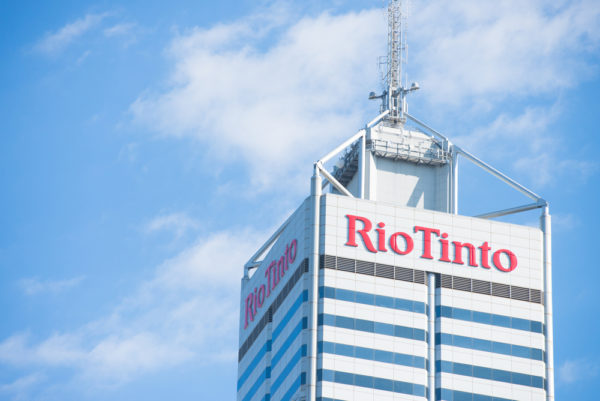
Seldom could a company report be more disturbing than the one published this week by mining giant Rio Tinto. Research commissioned by the board looking at the company’s culture found 21 cases of female employees who had experienced attempted rape or sexual assault in the past five years. Bullying is rife, as is racism.
A huge 28% of female workers report being subjected to sexual harassment, with the figure leaping to 34.4% for women under 25 and 38.7% of women aged 25–34. The report says the majority of women report “experiences of everyday sexism which took a toll on their self esteem, personal relationships and general health as well as their capacity to progress in the organisation”.
But that is not all. The report also reveals that bullying is “systemic across Rio Tinto worksites”. Once again, women are the hardest hit, with 53% saying they have been bullied compared with 47% of men.
Researchers unearthed racism too. While some employees from diverse backgrounds have neither seen nor experienced racism, there is a “strong view” that racism in some parts of the company has been “normalised”. One worker told researchers: “I have copped racism in every single corner of this company.” Racism is more common in Rio Tinto’s South African operations, while indigenous people among Australian employees also suffer high levels of abuse.
Cultural crisis
Shareholders did not like what they read, and the company’s share price took a modest tumble on the London Stock Exchange. But observers across the world were left astonished at the extent and depth of the cultural crisis that appears to be present inside the organisation.
Chief executive Jakob Stausholm told reporters he felt “shame and enormous regret”. One investor called for a “zero tolerance” approach to sexual assault and discrimination inside the company, while others called for increased investor scrutiny of the company and its culture. One industry watcher described the report as “another nail in the reputational coffin” of Rio Tinto’s previous CEO Jean-Sébastien Jacques.
This is not the first report in recent times to shed light on a dysfunctional workplace culture and practices at Rio Tinto. The company was slammed in an Australian Parliamentary report in 2020 following the destruction of Juukan Gorge, a 46,000 year-old archeological site revered by the Puutu Kunti Kurrama and Pinikura peoples of Western Australia.
The destruction eventually prompted the resignation of the then CEO Jacques, and the eventual departure of company chair Simon Thompson.
The new culture report can be seen as Stausholm cleaning house as he comes to grips with changing the internal values and attitudes of a company employing 48,000 people in 10 countries. After taking over from Jacques, he’ll want a clear assessment of what’s happening in the organisation and uncover the most unsettling side of the company and its workforce.
According to Ben Willmott, head of public policy at the Chartered Institute of Personnel and Development (CIPD), coming clean over a workplace crisis early is increasingly important because social media and other web platforms, such as Organise and Glassdoor (where employees are encouraged to spill the beans on their organisations), have hugely increased transparency.
“Proactive” and “visible” steps towards resolving issues has therefore become the most effective way of finding a solution, adds Willmott. “Highlighting problems where they exist, such as discrimination or harassment, and being seen to make public commitments to addressing them, can give staff confidence that these issues are being taken seriously and a strong message to the workforce that behaviours and working cultures need to change.”
Corporate reputation expert Stephen Cheliotis, chief executive of the Centre for Brand Analysis, says Rio Tinto was right to commission and then publish its culture report in full. “It would be worse to be found out than fess up,” he says.
But, while the details of the report are appalling, observers will watch whether to see if it makes a difference. Rio Tinto spells out in some detail the list of actions it now needs to deliver. These include the CEO and executives offering a signed statement committing the company to a “safe and inclusive” workplace; tackling managers who fail to address “harmful behaviour”; new metrics for monitoring culture change; regular reviews; a new “everyday respect” global policy; and education programmes for workers.
But much will hang on how the recommendations are delivered. “The most important thing is what they do with the report, delivering action and changing the culture at Rio Tinto,” Cheliotis says.
“A year or two later and if nothing’s changed, then you have a really big reputational issue on your hands. Little or no action would make company leaders appear as if they either didn’t care or were incapable.”
Rio Tinto culture and ESG
The next task will be for Rio Tinto to deliver on the recommendations. This will be important for investors and staff alike. Though investors appear to have stuck by the miner for now, they too function in an ESG-conscious world and will find it difficult to ignore this document. Managers should also remember increasing democratisation means Rio Tinto no longer has to worry only about the disposition of professional fund managers but the votes of underlying shareholders too.
The culture report will be remembered as an excruciating act of confession in the full glare of international media. Investors, campaign groups and workers will now be tuned in for change.
Without it, the report will become a dust magnet and do little to enhance the firm’s reputation or improve conditions for employees still with the mining company in spite of the harmful abuse meted out by colleagues.
Related Posts
-
January 13, 2022

Report suggests crisis "fatigue" is eating away at gains made during 2020, with employee issues and ESG highlighted as concerns.
-
July 4, 2022

‘Companies that believe their own greenwash are embedding liability and storing up risk’, warns chair of UK Environment Agency.
-
March 1, 2022
Two-thirds of internal audit chiefs support attempts to strengthen directors’ duties to “promote, monitor and assess” corporate culture.
-
July 11, 2022

Listening to what stakeholders define as valuable is the key to successful governance—and it will make corporate reporting much easier, too.