Skip to content

13 August, 2026

  • Saved Articles
  • My Account
  • Subscribe
  • Log In
  • Log Out

Board Agenda

  • Governance
  • Strategy
  • Risk
  • Ethics
  • News
  • Insight
    • Categories

      • View all
      • Governance
      • Strategy
      • Risk
      • Ethics
      • Board expertise
      • Finance
      • Technology
    • climate litigation

      Why climate transition is a governance imperative

      The ‘just transition’ to a sustainable, resilient economy means navigating systemic change fairly and successfully.

      board skills clash

      When board skills clash

      Board composition in terms of expertise has a clear impact on entrepreneurial decision-making and strategy,...

      create value

      4 ways to help your CFO create value

      The chief financial officer has a vital contribution to make to the board’s strategy on...

  • Comment
      • View all
    • climate litigation

      Why climate transition is a governance imperative

      The ‘just transition’ to a sustainable, resilient economy means navigating systemic change fairly and successfully.

      create value

      4 ways to help your CFO create value

      The chief financial officer has a vital contribution to make to the board’s strategy on...

      leadership crisis

      How to fix the leadership crisis

      Unpopular opinion? It’s time for organisations to shift away from feelings to focus on competency...

  • Interviews
      • View All Interviews
      • Podcasts
      • Webinars
    • governance

      How better governance helps private companies grow

      If governance is to become mature, management decision-making has no place on the board’s agenda,...

      future-ready

      Is your board ‘future-ready’?

      The survival of a business in uncertain times depends on its ability to pivot as...

      investor confidence

      Lack of audit reform ‘will hit investor confidence’

      Government's failure to push ahead with audit reform is a risk to UK investments, the...

  • Board Careers
      • View All
    • board skills clash

      When board skills clash

      Board composition in terms of expertise has a clear impact on entrepreneurial decision-making and strategy,...

      female ceos

      FTSE 100 CEO appointments rise

      The number of CEO appointments has doubled in six months, although the global picture suggests...

      board role

      How to engage with outreach

      When board opportunities knock, should you answer the door? Here are tips from a new...

  • Resource Centre
      • White Paper Downloads
      • Book Reviews
      • Board Advisory & Corporate Services
    • FRC Annual Review of Audit Quality 2026

      This Financial Reporting Council report uses findings from its supervisory activities to assess audit quality...

      Governance Guide: How Boards Drive Growth

      This Board Agenda Governance Guide investigates how directors can evolve to drive performance and growth...

      Organizational Transformation in the Age of AI

      This World Economic Forum paper looks at how organisations must re-architect their workflows and operating...

  • Events
  • Search by topic
    • Governance
    • Strategy
    • Risk
    • Ethics
    • Regulation
    • ESG
    • Investor Relations
    • Careers
    • Board Expertise
    • finance
    • Technology

Fall in number of boards that ‘discuss ethics on a regular basis’

by Gavin Hinks on April 3, 2020

Research from the Institute of Business Ethics reveals that ethics, values and culture are struggling to find a home at the top of boardroom agendas.

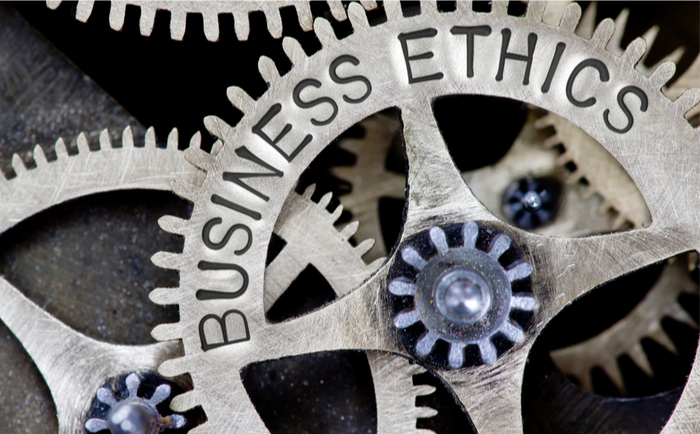
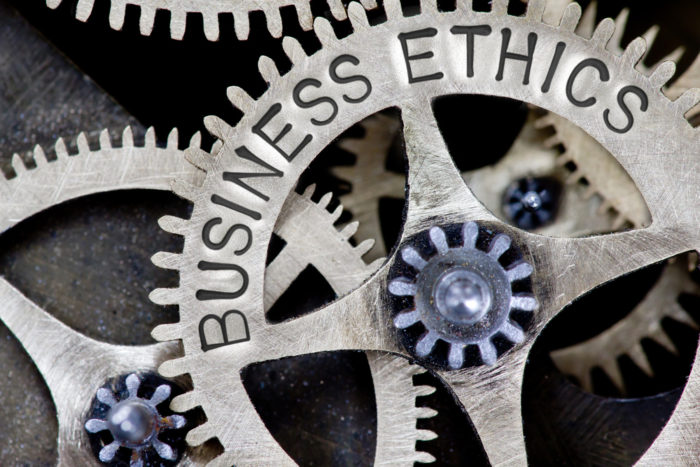
Business ethics, boardroom ethics

Image: EtiAmmos/Shutterstock

Favorite

It is a challenge to move ethics into the boardroom, according to research examining business ethics across the UK and Europe.

The Institute of Business Ethics (IBE) looked at reports from 242 companies and found that fewer than half—46%—state that their boards received mandatory training on its ethics programme.

More startling, the number of boards discussing ethics, values and culture on a regular basis has fallen from 86% in 2016, when the survey was first conducted, to 69% this time.

Those boards that do discuss ethics appear to do so on a more regular basis, with 42% saying it happens quarterly, compared with 24% in 2016. Almost a quarter, 24%, reveal that ethics plays no part in board performance appraisals.

More than half of companies—51%—said they had an ethics committee at board level; 49% said their committees were either sub-board level or their companies have no ethics committee at all.

The IBE report says: “The data collected for this report shows that the approach to ethics in large organisations is evolving into better practice over time, but some important challenges still remain.”

Ethics committees

Guendalina Dondè, head of research at the IBE, said research in the past has shown in many cases where ethics committees do not exist it is because a decision has been made that the board itself is the right arena for considering ethics. In some cases, specialist committees were disbanded so ethics could be a subject for the entire board.

“On the other hand,” she said, “some companies believe that in their case having a committee was a great way to keep attention on the issue.

“We were surprised at these result because we would have expected that people who said ethics, values and culture were regularly discussed at board level would have a committee, but it doesn’t seem to happen and most companies that discuss ethics also have a board-level committee.

“We wouldn’t go as far as saying that every company should have a board-level committee, but we see from the results that it helps keep ethics on the board’s agenda.”

Boardroom ethics training

Getting ethics in the boardroom may be an issue of training. Less than half of respondents, 46%, said their companies provided mandatory ethics training for boards. Even those who took part in the survey found this alarming. One respondent told IBE interviewers: “You have to lead from the top and the reinforcement of the message is the same: whether you work on a factory floor or in an office, you need to be reminded about the main risks that we face.

“Of course, how you pitch the training to a blue collar worker is different to how you pitch it to a board member, but the message and the content of the training have to be the same.”

The UK seemed to fair less well than European counterparts on some issues. In the UK 75% of companies had a publicly available code of ethics, compared with 97% in Italy and France and 87% in Germany. In Spain the figure is 100%.

UK companies were also less assiduous in mentioning ethics in their annual reports, at 77%. In France it is 80%, Italy 82%, Germany 87% and Spain 89%.

  • Facebook
  • Twitter
  • Google+
  • LinkedIn
  • Mail

Related Posts

  • Ignore trust at your peril
    August 7, 2023
    trust matters

    Consumers and employers expect ethical corporate behaviour—and will vote with their feet when trust is breached.

  • Investment managers hesitant to embrace ethics as part of ESG
    March 21, 2022
    Business ethics on cogs

    Study finds investors shy away from direct talk of ethics, but some are assessing company culture as an indicator of ESG performance.

  • The Secret NED: whistleblowing and the board
    September 2, 2022
    whistleblowing

    Formal whistleblowing means trouble, not only for the obvious reason, but because it shows the organisation failed to address valid concerns.

  • Annual survey reveals 42% of the public consider business 'unethical'
    January 18, 2022
    Employees commuting to work

    The Institute of Business Ethics says just 40% of those polled in its annual survey think business is ethical—down from 59% in 2020.

Search


Follow Us

Most Popular

Featured Resources

The Future of FTSE 350 Chairs: Pathways, Pipelines & Barriers 2026

This report is a collaboration between the FTSE Women Leaders Review and Professor...

Agentic AI from principles to practice 

‘A C-suite guide to capturing value without losing control’, this Forvis Mazars...

Route to the Top: Europe 2026 

This survey report from Heidrick & Struggles finds that companies are tending...
board's role in a rewired world fgs 2026 cover

A hard job getting harder: The board's role in a rewired world

The role of a corporate director is demanding intellectually, ethically and strategically—and...

Boardroom resilience: Practical governance for risk, readiness and rapid response

Boards are operating in a world defined by uncertainty. Geopolitical tensions, climate...

Board Value Index Summer 2026

Board Intelligence found 86% of directors say rigid processes and inconsistent frameworks...

Governance Guide: Navigating Conflict in the Boardroom

The 'Governance Guide' on navigating conflict in the boardroom provides practical...

Becoming a non-executive director (4th edition)

Board composition is the subject of much debate, while the role of the non-executive...

SUBSCRIBE TODAY

Stay current with a wide-ranging source of governance news and intelligence and apply the latest thinking to your boardroom challenges. Subscribe


  • Editors & Contributors
  • Editorial Advisory Board
  • Board Advisory & Corporate Services
  • Media Marketing Solutions
  • Contact Us
  • About Us
  • Board Director Network
  • Terms & Conditions
  • Privacy Policy
  • Cookies

Copyright Š 2026 Questor Media Group Ltd.

  • Terms & Conditions
  • Privacy Policy