Skip to content

10 February, 2026

  • Saved Articles
  • My Account
  • Subscribe
  • Log In
  • Log Out

Board Agenda

  • Governance
  • Strategy
  • Risk
  • Ethics
  • News
  • Insight
    • Categories

      • View all
      • Governance
      • Strategy
      • Risk
      • Ethics
      • Board Expertise
      • finance
      • Technology
    • mindset

      Transformation begins with board mindset

      Boards cannot lead meaningful change without being prepared to examine and adjust how they think,...

      growth in a volatile year

      5 strategies for growth in a volatile year

      A survey of the C-suite in Europe reveals the practical and pragmatic approaches being taken...

      AI governance

      6 steps to protect leaders in the era of AI

      Organisational trust and board members’ reputations increasingly need safeguarding in a digital, algorithm-driven world.

  • Comment
      • View all
    • mindset

      Transformation begins with board mindset

      Boards cannot lead meaningful change without being prepared to examine and adjust how they think,...

      growth in a volatile year

      5 strategies for growth in a volatile year

      A survey of the C-suite in Europe reveals the practical and pragmatic approaches being taken...

      audit reform

      This is the worst time to abandon audit reform

      High-quality audit, accurate corporate reporting and strong governance give investors confidence and help companies operate...

  • Interviews
      • View All Interviews
      • Podcasts
      • Webinars
    • 2026 OUTLOOK

      Are you ready for 2026?

      Buckle up: it looks like boards are in for a turbulent time. We interviewed key...

      sustainability report audit

      Thinking of sidelining sustainability? Think again

      Boards that embed sustainability into strategy will be ready to face today’s complex environment, the...

      global commerce

      Is global commerce about to be reshaped?

      As the US Supreme Court gets set to rule on the legality of tariffs, experts...

  • Board Careers
      • View All
    • female CEO

      Number of women in leadership stays unchanged

      In 2021, there were only eight female CEOs in the FTSE 100—a figure that is...

      female NED

      UK female non-executives earn £73k less than male NEDs

      Although the UK’s average gender pay gap on boards is shrinking, it is still one...

      directors duties

      3 top tips on directors’ duties

      When directors fall short of their responsibilities, the consequences can be devastating. How can board...

  • Resource Centre
      • White Paper Downloads
      • Book Reviews
      • Board Advisory & Corporate Services
    • Allianz Risk Barometer 2026

      Allianz Risk Barometer 2026

      For this report, Allianz sought the views of 3,338 respondents from 97 countries and territories,...

      forvis mazars ceo 2026

      C-suite barometer: outlook 2026

      Forvis Mazars collected the views of more than 3,000 C-suite executives across 40 countries, for...

      PwC Global CEO 2026 survey cover

      PwC 29th Global CEO Survey 2026

      PwC’s 29th Global CEO Survey is based on responses from 4,454 chief executives across 95...

  • Events
  • Search by topic
    • Governance
    • Strategy
    • Risk
    • Ethics
    • Regulation
    • ESG
    • Investor Relations
    • Careers
    • Board Expertise
    • finance
    • Technology

UN calls for ‘culture change’ to improve human rights in supply chains

by Gavin Hinks on December 3, 2021

Push for due diligence comes as part of a roadmap aiming to embed use of the UN’s Guiding Principles on Business and Human Rights.

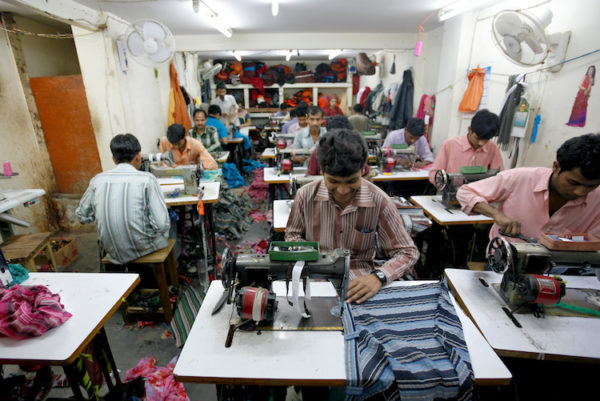
Factory in Delhi making clothes for western companies

Image: Paul Prescott/Shutterstock.com

Favorite

A culture change is required to spread the use of specialist due diligence by companies to check for abuses in supply chains, according to a key document setting out aims for the UN’s special working group on business and human rights.

The document forms a roadmap detailing the aims of the working group over the next decade as it campaigns to embed use of the UN’s Guiding Principles on Business and Human Rights (UNGPs).

Setting out a list of eight overarching goals, the working group’s UNGPs 10+ plan, marking a decade since the UNGPs were established, places human rights due diligence at the heart of its project.

“To realise lasting change and ingrain business respect for human rights as part of companies ‘DNA’,” writes the working group, “there is a need for a culture change supported by integration of human rights due diligence into governance and organisational frameworks and into the core of the business model.”

The document will be welcomed by campaign groups urging governments around the world to either update or introduce laws for mandatory human rights due diligence. Many observers see the UN’s fresh push for due diligence as the most important part of the roadmap.

Leo Martin, director and founder of advisory firm Good Corporation, says: “The bit of the roadmap that is most important is the due diligence section which is saying, ‘Stop talking about it and start checking and proving that you have actually got relationships with suppliers and partners to prove to yourself that they are operating without incurring any sort of human rights abuse’.”

Human rights in global supply chains

Not everyone sees the emphasis on due diligence in the same way. According to John Morrison, chief executive of the Institute for Human Rights and Business, it was never the intention of John Ruggie, architect of the UNGPs, that due diligence should be become their “centre of gravity”. Morrison’s concern is that due diligence has created an “industry of consultants and box ticking compliance measures.”

“We also know that ‘vanilla’ human rights due diligence has it limitations,” says Morrison, hence work on “enhanced due diligence” in conflict zones. He adds there is a risk that conclusions reached via due diligence for business impacts “might not reach the same conclusions as a wider assessment of societal human rights impacts”.

While there may be concerns, some observers believe business has made strides over recent years with many using models such as the French Law of Vigilance as a way of handling their relationship with potential human rights risk in their supply chains.

Governments have been keen in recent years to push the introduction of due diligence. The European Union has been wrestling with the terms of a new law, the Sustainable Corporate Governance Directive, that would make human rights due diligence mandatory across member states. However, the directive is yet to be fully signed off.

In the UK, a campaign is underway for the introduction of mandatory due diligence to update the Modern Slavery Act. A group of 36 companies, including John Lewis, Primark and Tesco, recently signed an open letter arguing that the pandemic has revealed the “fragility” of global supply chains and the vulnerabilities they create for workers, communities and indigenous peoples. They argue that while the Modern Slavery Act may have once been cutting edge advances elsewhere have since made the UK look like a “laggard”.

At the time, Thulsi Narayanasamy, of the Business and Human Rights Resource Centre, told Board Agenda: “The UK must consider introducing mandatory laws that hold corporations accountable for conducting human rights due diligence across their supply chain, including paying a living wage.

“Voluntary measures have failed to provide the most vulnerable workers with a protection of their rights so introducing binding laws that hold companies to account for due diligence failures would be the first step towards ensuring that everyone has their basic rights respected and protected at work.”

Mandatory due diligence

Disappointment with voluntary due diligence measures is where many recent not-for-profit campaigns have focused their concern. And part of the UN roadmap attempts to confront uptake of good due diligence practice with an explicit commitment to “scale up” adoption of human rights principles into business “processes and practices”. How the working group will achieve that is left unclear, though one route may be to persuade governments to introduce manadator their.

The working group recognises there may be obstacles along the way. National laws may conflict with human rights rights principles; business relationships in some locations may be based on corruption, especially in “conflict-affected areas”.

But a number of countries have already are working on due diligence measures. France, Germany, the Netherlands and Norway already has them. Japan is expected to reference human rights in a new corporate governance code.

The roadmap may seem an esoteric document to many company directors. It serves up strategic intent rather than a list of action points for discussion at the next board gathering. John Morrison says an opportunity may have been missed for the roadmap to elaborate on the identity “affected stakeholders” as a useful tool for board “prioritisation”.

However, it does emphasise the importance of stakeholders and, warns Morrison, it would be a mistake to ignore the document. “There is nothing in the roadmap itself to directly compel boards to pay attention but they would be foolish to overlook the wider implications of societal expectation, of which the UNGPs are a part.”

  • Facebook
  • Twitter
  • Google+
  • LinkedIn
  • Mail

Related Posts

  • EU publishes proposals for human rights due diligence law
    February 24, 2022
    EU flag

    The proposals require company directors to take into account human rights, climate change and sustainability in their decision-making.

  • Companies protest delay in EU human rights due diligence legislation
    February 9, 2022
    EU flag

    Companies including Ikea, Danone and Aviva Investors have signed a letter calling on the EU to accelerate its work on human rights proposals.

  • Calls grow for tougher rules on human rights in supply chains
    July 7, 2021
    Hands in chains

    The Corporate Justice Coalition says the UK cannot be viewed as a leader on human rights based upon the current Modern Slavery Act.

  • EU's human rights and sustainability law faces criticism from academics
    April 19, 2022
    EU flag

    Legal experts are highlighting a host of issues with the proposals, from scope and standards to a lack of protection for whistleblowers.

Search


Follow Us

Most Popular

Featured Resources

wef global risks 2025

The Global Risks Report 2025

The 20th edition of the Global Risks Report reveals an increasingly fractured global...
Supply chain management cover

Strategic Oversight in Supply Chain Management: A Guide for Corporate Boards 2025

Supply chains have become complex, interdependent and opaque and—according to research...
OB-Cyber-Security

Cyber Security: What Boards Need to Know

Maintaining firewalls, protecting servers and filtering malicious emails rarely make...

C-suite barometer: outlook 2025 - UK insights

Forvis Mazars draws UK insights from its global study and looks at UK executives’...

The IA’S Principles Of Remuneration 2024 2025

This guidance from the Investment Association is aimed at assisting remuneration...
Diligent 2024 leadership tech cover

Leadership, decision-making & the role of technology: Business survey 2024

This research report by Board Agenda and Diligent sheds light on how board directors...

Director Reference Guide: Navigating Conflict in the Boardroom

The 'Director Reference Guide' on navigating conflict in the boardroom provides practical...
Nasdaq 2024 governance report cover

Nasdaq 2024 Global Governance Pulse

This Nasdaq survey gathered data from more than 870 board members, executives, and...

Becoming a non-executive director (4th edition)

Board composition is the subject of much debate, while the role of the non-executive...
art & science brainloop new cover

The Art & Science of Creating an Effective Board

Boards are coming under more scrutiny and pressure than ever before from regulators,...
SAA First time NED guide

First Time Guide for Non-Executive Directors

The role of the non-executive director has never been more vital: to advise, support,...

SUBSCRIBE TODAY

Stay current with a wide-ranging source of governance news and intelligence and apply the latest thinking to your boardroom challenges. Subscribe


  • Editors & Contributors
  • Editorial Advisory Board
  • Board Advisory & Corporate Services
  • Media Marketing Solutions
  • Contact Us
  • About Us
  • Board Director Network
  • Terms & Conditions
  • Privacy Policy
  • Cookies

Copyright © 2026 Questor Media Group Ltd.

  • Terms & Conditions
  • Privacy Policy