

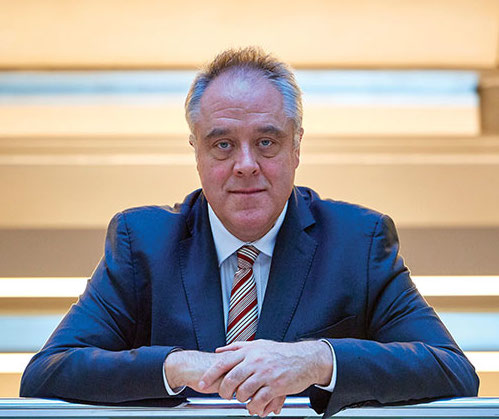
“It’s a market-led process and isn’t reliant on any one country,” says Richard Howitt (pictured), chief executive of the International Integrated Reporting Council (IIRC)—the body that gave the world the fastest-growing corporate reporting framework that supports protection for the environment.
It may seem like an obvious statement, but in a world transfixed by the presidential victory of Donald Trump it seems like a question worth asking. Trump, famously, is a climate change denier, on record proposing to somehow cancel the Paris agreement.
As integrated reporting’s (IR) core tenets elevate natural resources to the level of a source of capital that has to be accounted for and protected, it seems fair to wonder whether the IR project can be sustained in a Trump-dominated world.
“Governments will change, and change again,” Howitt says. “That’s something to be anticipated, but not the driver of integrated reporting.”
New leaders
Howitt, an MEP for 20 years and the European Parliament’s rapporteur on corporate social responsibility, took the IIRC reins on 1 November, just ahead of the US election. But as Trump’s impending ascent to presidential power causes international consternation, it has failed to dim Howitt’s belief in the project of bringing IR to the world.
Nor does the result mean he’s ignoring the US as a potential market for IR. Signals are emerging that the world’s biggest economy is buying into the idea. General Electric has produced an integrated report that has received widespread approval. For Howitt, this equals a platform to be built upon.
“I’m going to be upping my activity in the United States,” he says, “because the messages we’re getting from the US are very positive and strong, and I want to respond to that.”
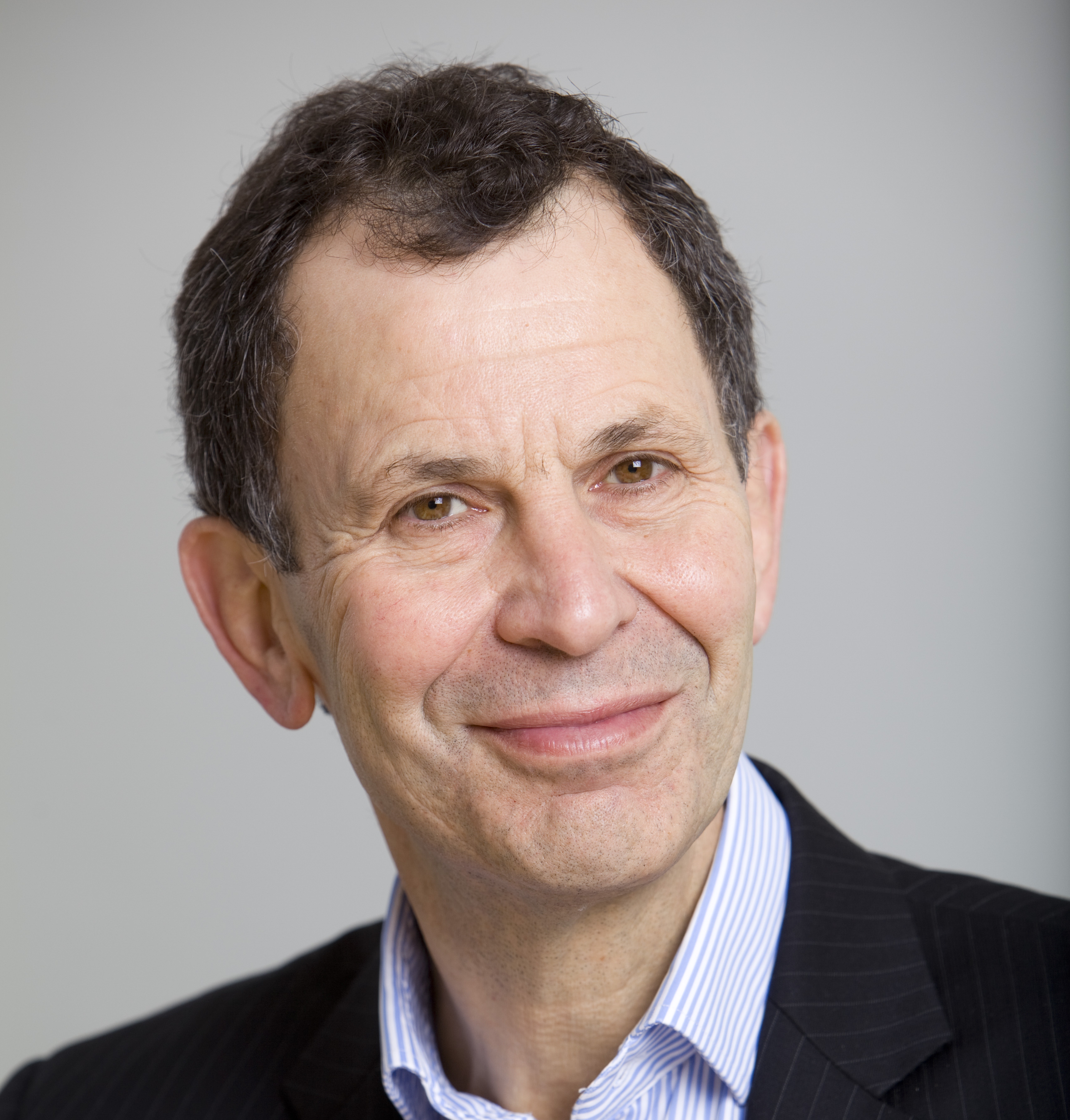
Howitt succeeds Paul Druckman at the IIRC, who served as CEO since the body’s inception in 2011. Both of them gave Board Agenda their views on the remarkable journey the IIRC has undertaken.
And the story stands out, not least because the organisation has royal connections. It came about as a result of a meeting held in 2010, when Prince Charles convened a grand summit of the most senior figures in accountancy, financial regulation and stock exchanges. There it was decided that a new body was needed to spearhead a new kind of reporting. This new reporting would show how a company’s social and environmental impact had been threaded into its strategic thinking.
In 2013 the IIRC produced a comprehensive framework that outlines the principles for writing an integrated report, while describing the core underlying concepts. There are now 1,000 companies in more than 30 countries using IR, while companies such as Microsoft and HSBC have been in the vanguard. Meanwhile, the list of companies switching to IR continues to grow.
Long-term drivers
The IIRC sees its mission as nothing less than the reform of company reporting and corporate governance across the world. At its heart is a belief in using “long-term” drivers for making business decisions, the information for which is drawn from its framework of six “capitals”.
Those include financial, manufactured and intellectual; but also—and perhaps most significantly—integrated reporting and “thinking” also considers human resources, social relationships and natural resources as capital inputs to be fed into strategic analysis.
This approach helps companies to develop a business strategy that really considers its affect on the environment and societies. Both Druckman and Howitt see great strides having been made.
–Richard Howitt
“What we’ve done is initiate a very different dialogue among the core financial reporting community,” says Druckman, “who now recognise—if they didn’t before—that there’s a lot more to understanding a business than IFRS [International Financial Reporting Standards] or US GAAP [Generally Accepted Accounting Principles].”
Howitt, as you might expect from someone who has had a career in politics, is more ebullient. “Awareness of integrated reporting is high and acceptance is high.
“I don’t meet many people who don’t believe that integrated reporting isn’t the future. They see it as inevitable, they see it as right. They know it’s going to happen and they want it to happen, and we’re about making it happen.”
Resistance
There has been resistance along the way though. Druckman talks about “reporting fatigue” and what he calls “fear of disclosure”. With reporting, companies faced with an invitation to use IR also faced a vast array of alternatives for sustainability reporting, as well as a raft of reforms to accounting standards. “They were completely overloaded,” says Druckman.
On the disclosure front, companies simply feared what IR was going to make public: their business models. But Druckman says this was “relatively straightforward to get over”, as long as you could get through the door.
Howitt takes a more diplomatic line. “I don’t think resistance is quite the right word,” he offers.
“There are huge pressures in the world of business; the business environment is fast changing and we are all aware of the pressures of short-termism, which is what we are trying to change.”
His second obstacle is in line with Druckman’s thoughts on “reporting fatigue”. Howitt dubs it a “level of confusion” stemming from the sheer multitude of reporting frameworks available. He says that he heard Mark Carney, governor of the Bank of England, say at a recent event that there are around 400 disclosure frameworks on environmental sustainability alone.
“This is where integrated reporting comes in,” says Howitt, who concedes many alternatives will provide quality information on one of the core capitals. But IR has deeper qualities.
“What integrated reporting is doing is making sure that companies understand their impact—the risk and opportunities across all six capitals—to work out for themselves and their investors what is material.”
Gathering support
There is no doubt that IR is having an impact. And in essence the IIRC’s approach has been a twofold strategy: expand the network of companies applying integrated thinking and reporting to their strategic decisions; and win endorsement from key institutional players such as regulators and international bodies.
There has been some success in this area. Japan’s introduction of a stewardship code embodies IR (300 Nikkei-listed companies are preparing to use IR next year), while Larry Fink, head of the world’s biggest asset manager, BlackRock, famously wrote a letter to US chief executives asking them to focus on “long-term value creation”. While it was not an explicit endorsement of IR, it was certainly viewed as a fillip for its underlying values.
Perhaps the most important boost to the IIRC, however, was a recommendation to the G20 in 2015 by its associated business summit—the B20—that it commission a report on how member states can promote the use of IR.
–Paul Druckman
Such success raises the question: what next? Druckman is reflective on this subject. In a blog marking the end of his time at the IIRC he wrote that, despite much work on long-term thinking by a multitude of organisations, some of the core values inherent in IR are still to be “embedded”. And that, he says, is the challenge of the next five years.
Druckman says: “I still don’t believe that businesses in general really get the fact that they’re not just separate legal entities that have no heart and no soul.” They are much more, says Druckman, because big companies at least have the potential to make a significant difference to a “nation or economy”.
He quotes Andy Haldane, chief economist at the Bank of England, as evidence. Haldane wrote that the average distribution to shareholders of the FTSE 100 in 1975 was ten pence in the pound, or 10%. In 2015 that figure rose steeply to 60–70%.
“What that means is that there isn’t a reinvestment,” says Druckman. “The company is just paying off traders in its shares rather than the dedicated stakeholders.”
Relentlessly global
Meanwhile, Howitt views the future as being about tackling the job in hand. He says he is going to be “relentlessly global”, racking up the air miles to take the message of IR to the United Nations, the next B20 meeting in Germany, and in the new year to Japan, Singapore, Malaysia, the US, Brazil and India. This month he’ll attend the IIRC’s annual conference in London, this year held jointly with the International Corporate Governance Network so the message of IR can be delivered to boards and investors.
“We have to maintain that sense of vision,” says Howitt, commenting on his agenda for the coming years. “For the level of change we want to achieve, it’s not just a numbers game. We’re about a whole-systems approach and changing whole systems in the world.”
He says Druckman’s blog comments were right—a debate about long-term value in business has seized the agenda, and the IIRC has been part of the story.
“But I’m not content with integrated reporting just being a part of that agenda…I want us to be at the heart of delivering it. I believe the whole concept of integrated reporting is a key to help deliver those ambitious but necessary aims,” says Howitt.
Delivering the change means IR winning endorsement, and firmly in Howitt’s sights is the G20’s Financial Stability Board (FSB) and its task force looking at climate-change-related financial disclosure.
The task force is charged with coming up with guidelines for reporting climate-change risk, and is set to become the next big development in governance and protecting long-term value.
Howitt says he is deeply involved in a discussion on the FSB task force, and its climate-change guidelines are expected to receive full G20 endorsement. IR, he insists, must be at the centre of its recommendations.
“My priority before I started was making sure we are at the heart of the discussion for the Financial Stability Board, because I believe it will seize international attention next year.”
If that happens—and momentum appears to be heading that way—it will represent a major success for IR and the environment, and potentially take the IIRC out of what it calls its “breakthrough” phase: “a meaningful shift towards early adoption” of the IR framework.
And Howitt is nothing if not positive about the IIRC’s prospects. “I’m a new chief executive, I’ve come in to succeed. It’s not that I am not aware of all the threats and the risks of the IR journey. But I want to talk about success. I believe that this is the right thing and I believe we will succeed.”
This article is supported by Mazars Business. For Good—interviews on thinking and acting long term to enhance business performance.
Related Posts
-
August 17, 2022

The FRC has set out its plans to help integrate sustainability into corporate governance, reporting and audit reforms.
-
July 1, 2022

Now that governance has come of age, businesses should be able to innovate within the boundaries of good regulation.
-
August 18, 2023

Although the pandemic devastated economies, companies got better at corporate reporting, researchers in New Zealand found.
-
February 10, 2023

As the new rules wend their way through the EU drafting process, interested parties from all sides clamour to be heard.