Skip to content

16 June, 2026

  • Saved Articles
  • My Account
  • Subscribe
  • Log In
  • Log Out

Board Agenda

  • Governance
  • Strategy
  • Risk
  • Ethics
  • News
  • Insight
    • Categories

      • View all
      • Governance
      • Strategy
      • Risk
      • Ethics
      • Board expertise
      • Finance
      • Technology
    • agm

      Why boards should keep shareholders in the room

      The format of an AGM is no administrative detail. It is really a board-level matter,...

      AI skills

      Board recruitment in the age of AI

      As NEDs embrace a data-driven future, digital governance capability is becoming as important as traditional...

      cybersecurity

      The risky business of AI consultancy

      Boards need to be wary: the current ‘gold rush’ of AI consultancy work poses a...

  • Comment
      • View all
    • agm

      Why boards should keep shareholders in the room

      The format of an AGM is no administrative detail. It is really a board-level matter,...

      ftse female leader

      Why does more women in senior decision-making roles matter?

      Complex times need different voices to navigate fast-moving change, but progress on women’s representation in...

      nature risk

      How can boards tackle nature-dependent disruption?

      To prevent further price shocks and supply crises, we need to focus now on nurturing...

  • Interviews
      • View All Interviews
      • Podcasts
      • Webinars
    • future-ready

      Is your board ‘future-ready’?

      The survival of a business in uncertain times depends on its ability to pivot as...

      investor confidence

      Lack of audit reform ‘will hit investor confidence’

      Government's failure to push ahead with audit reform is a risk to UK investments, the...

      stewarding AI

      AI is a ‘special case for governance’

      As AI use in the boardroom grows, it’s essential to focus on the ethical and...

  • Board Careers
      • View All
    • Bezos Dimon

      Chair role ‘needs more flexibility’

      It would be better to move beyond the ‘binary choice’ of non-executive vs executive, argue...

      AIM diversity

      AIM’s failure to act on diversity threatens governance

      The alternative investment market is not keeping pace on gender diversity, to the detriment of...

      UK and US CEO

      Corporate shift toward experienced CEOs

      Leadership succession shows fewer first-time chief executives, especially in the US, according to turnover figures.

  • Resource Centre
      • White Paper Downloads
      • Book Reviews
      • Board Advisory & Corporate Services
    • Board Value Index Summer 2026

      The Summer 2026 Board Value Index from Board Intelligence examines why board decision-making is under...

      Venture Capital in the UK cover

      Venture Capital in the UK 2026

      This report, from UK Private Capital, examines the current state of the UK venture market...

      board's role in a rewired world fgs 2026 cover

      A hard job getting harder: The board’s role in a rewired world

      The role of director is demanding intellectually, ethically and strategically. FGS interviewed 175 experts and...

  • Events
  • Search by topic
    • Governance
    • Strategy
    • Risk
    • Ethics
    • Regulation
    • ESG
    • Investor Relations
    • Careers
    • Board Expertise
    • finance
    • Technology

Former CEO of Guardian Life Insurance Company of America on closing the skills gap

by Gavin Hinks on March 4, 2021

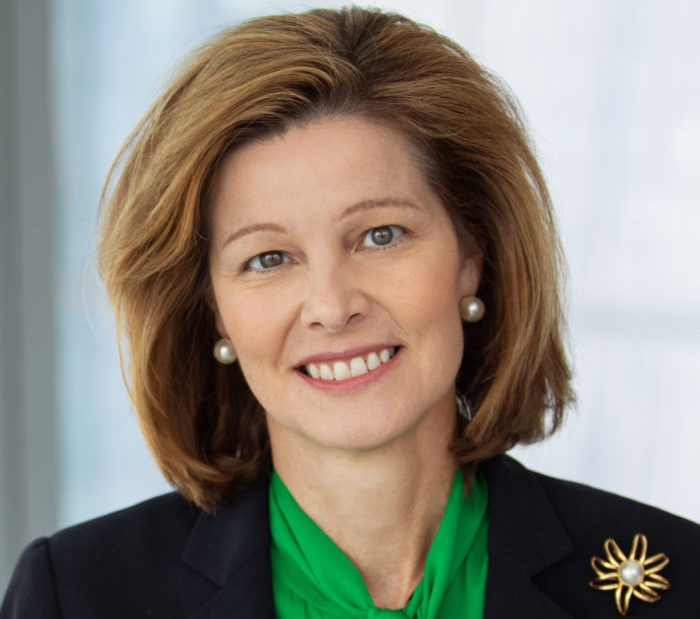
Just as Covid has seen firms and employees work in previously unthinkable ways, we all need new skills for the future, says Deanna Mulligan.

Deana Mulligan

Favorite

After the tragedy, if there is one thing the pandemic has given us it is a vision of the future: increasing levels of digital—potentially remote—working and more automation. On the horizon is a world of advanced technology and a demand for future skills and new ways of working. Artificial intelligence, big data and robotics all offer the prospect of dramatic change to our working lives. We knew that, but Covid-19 has perhaps given us a fresh view of startling clarity.

For Deanna Mulligan, former chief executive and chair of Guardian Life Insurance Company of America, it is a perspective that should not be ignored. Her new book, Hire Purpose: How Smart Companies Can Close the Skills Gap, aims to tackle the problem of future skills head on. And corporate leaders should give the topic urgent attention.

“The future is here, in terms of a hyper-connected-via-technology environment for both consumers and employees,” she says. “There’s so many large-scale projects going on inside companies today that there aren’t enough people trained in how to deal with change, how to help people adjust, and help people learn new skills.”

Mulligan is not the only one who believes the skills needed for the future are a pressing problem.

A report from McKinsey, the management consultancy, says 75 million to 375 million people around the world may need to change occupations and learn new skills by 2030.

“The shift could be on a scale not seen since the transition of the labor force out of agriculture in the early 1900s in the United States and Europe, and more recently in in China,” the report says. Close to one in ten new jobs could be ones that have never existed before, the report adds.

Another McKinsey report says a quarter of the workforce in advanced economies could be working from home three to five days a week. Executives have said on average they will reduce office space by 30%. The pandemic has also caused e-commerce to grow two to five times faster, depending on which country you’re in.

Lifelong learning

Covid-19 has offered many lessons about the future of business and work, says Mulligan. “One of the things we learned is that companies can be much more flexible and adaptable than perhaps they have been in the past or thought they would be.” She adds: “And we saw employees learning new skills on the fly.”

Mulligan offers a skills prescription that is wide ranging, but potentially profound, based upon adoption of lifelong learning as a facet of a company’s “purpose”.

“In this crisis it’s really the frontline employees who have invented new and different ways of doing things to make sure their companies delivered”

She says companies should be taking “responsibility” for lifelong learning, employees will need to accept they will likely face retraining and should be more “entrepreneurial” in their outlook. “In this crisis it’s really the frontline employees who have invented lots of new and different ways of doing things in order to make sure their companies delivered,” Mulligan says.

Governments too have a role to play reviewing state provision for reskilling and retraining. But Mulligan places lifelong learning at the heart of a company’s societal purpose. At Guardian, she worked to connect employees with customers who had experienced the benefits of company services. The town hall meetings and get togethers where they met emphasised the employees’ role in wider society.

“We spent a lot of time at Guardian making sure people in the company knew how their jobs were contributing to the wellbeing of our policyholders,” she says.

She also lived the lifelong learning ethos while at Guardian, at one point putting all staff through the Agile model of software development to help manage an upgrade to company systems. This helped everyone understand what the project was about.

“We are going to have to learn to work in new ways and sometimes existing hierarchies or org charts don’t particularly fit the task to be done,” says Mulligan, “and we need to collaborate across functions and across business units. So that’s why we trained everyone in the Agile way of working,” she says.

Future leadership skills

It’s not just employees who will need to address their skills base. So too will leaders. Indeed, confronted by a new world of technology, the workplace will demand leadership more focused on collaborative working with their teams. This is key to balancing the process of change alongside the day-to-day problems of running of companies, says Mulligan.

“Everybody needs to learn a new skill set. It’s not just employees, it’s managers, leaders, CEOs as well”

“This is much more of a team-based learning problem than it is a top down leaders tell employees what to do problem. And, you know, let’s face it, we’re not really always very good at solving those kinds of problems. And so everybody needs to learn a new skill set. It’s not just employees, it’s managers, leaders, CEOs as well,” says Mulligan.

Despite the challenges, Mulligan is optimistic companies, governments and above all else, employees can deal with what’s coming, even though it might be painful. Some jobs will undoubtedly disappear altogether, she says.

“I hate to keep going back to the current crisis situation we’re in but we have been able to adapt. We’ve fumbled around, we’ve made some mistakes. Unfortunately, many people are unemployed, and we hope we can employ them again soon.

“But we are moving forward. And we are continuing to function as a society in really dire conditions we hadn’t really anticipated.

“And the reason we’ve been able to do that is because companies have been able to adapt and I think as this crisis, hopefully subsides, we will be able to use those skills to really attack this skill gap.”


  • Facebook
  • Twitter
  • Google+
  • LinkedIn
  • Mail

Related Posts

  • Corporate purpose: reasons for optimism, but vigilance is required
    October 2, 2021
    CEO in face mask

    Many companies have acted in a compassionate manner since the pandemic began; others haven't. Corporate purpose has made the difference.

  • BP and Shell windfall tax row reveals lack of progress on purpose
    February 22, 2022
    Shell and BP retro fuel transporting trucks

    Claim that windfall tax would hurt clean energy investment shows the change in mentality towards purposeful business isn’t taking root.

  • US corporate governance improvements 'slowed or stagnated' in 2021
    January 13, 2022
    Employees talking outside offices

    Report suggests crisis "fatigue" is eating away at gains made during 2020, with employee issues and ESG highlighted as concerns.

  • Workforce voice in corporate governance: where are we now?
    June 25, 2021
    Workers in overalls and helmets

    FRC research into implementation of requirements on workforce engagement shows that progress has been patchy.

Search


Follow Us

Most Popular

Featured Resources

wef global risks 2025

The Global Risks Report 2025

The 20th edition of the Global Risks Report reveals an increasingly fractured global...
Supply chain management cover

Strategic Oversight in Supply Chain Management: A Guide for Corporate Boards 2025

Supply chains have become complex, interdependent and opaque and—according to research...

Cyber Security: What Boards Need to Know

Maintaining firewalls, protecting servers and filtering malicious emails rarely make...

C-suite barometer: outlook 2025 - UK insights

Forvis Mazars draws UK insights from its global study and looks at UK executives’...

The IA’S Principles Of Remuneration 2024 2025

This guidance from the Investment Association is aimed at assisting remuneration...
Diligent 2024 leadership tech cover

Leadership, decision-making & the role of technology: Business survey 2024

This research report by Board Agenda and Diligent sheds light on how board directors...

Director Reference Guide: Navigating Conflict in the Boardroom

The 'Director Reference Guide' on navigating conflict in the boardroom provides practical...
Nasdaq 2024 governance report cover

Nasdaq 2024 Global Governance Pulse

This Nasdaq survey gathered data from more than 870 board members, executives, and...

Becoming a non-executive director (4th edition)

Board composition is the subject of much debate, while the role of the non-executive...
art & science brainloop new cover

The Art & Science of Creating an Effective Board

Boards are coming under more scrutiny and pressure than ever before from regulators,...
SAA First time NED guide

First Time Guide for Non-Executive Directors

The role of the non-executive director has never been more vital: to advise, support,...

SUBSCRIBE TODAY

Stay current with a wide-ranging source of governance news and intelligence and apply the latest thinking to your boardroom challenges. Subscribe


  • Editors & Contributors
  • Editorial Advisory Board
  • Board Advisory & Corporate Services
  • Media Marketing Solutions
  • Contact Us
  • About Us
  • Board Director Network
  • Terms & Conditions
  • Privacy Policy
  • Cookies

Copyright © 2026 Questor Media Group Ltd.

  • Terms & Conditions
  • Privacy Policy