
Skip to content

22 April, 2026

  • Saved Articles
  • My Account
  • Subscribe
  • Log In
  • Log Out

Board Agenda

  • Governance
  • Strategy
  • Risk
  • Ethics
  • News
  • Insight
    • Categories

      • View all
      • Governance
      • Strategy
      • Risk
      • Ethics
      • Board expertise
      • Finance
      • Technology
    • AI agents

      The AI risk faced by every board right now

      Even if no one in the organisation planned their arrival, AI agents are already present...

      sustainability litigation

      Is your board at risk of sustainability litigation?

      ESG disclosures, until recently focused on reputational risk and stakeholder expectations, are now becoming legal...

      sustainability Asia

      Navigating sustainability in Asia

      Boards operating across regions need to leave aside assumptions and consider the impact of a...

  • Comment
      • View all
    • AI agents

      The AI risk faced by every board right now

      Even if no one in the organisation planned their arrival, AI agents are already present...

      sustainability litigation

      Is your board at risk of sustainability litigation?

      ESG disclosures, until recently focused on reputational risk and stakeholder expectations, are now becoming legal...

      investor confidence

      Lack of audit reform ‘will hit investor confidence’

      Government's failure to push ahead with audit reform is a risk to UK investments, the...

  • Interviews
      • View All Interviews
      • Podcasts
      • Webinars
    • future-ready

      Is your board ‘future-ready’?

      The survival of a business in uncertain times depends on its ability to pivot as...

      investor confidence

      Lack of audit reform ‘will hit investor confidence’

      Government's failure to push ahead with audit reform is a risk to UK investments, the...

      stewarding AI

      AI is a ‘special case for governance’

      As AI use in the boardroom grows, it’s essential to focus on the ethical and...

  • Board Careers
      • View All
    • female CEO

      Number of women in leadership stays unchanged

      In 2021, there were only eight female CEOs in the FTSE 100—a figure that is...

      female NED

      UK female non-executives earn £73k less than male NEDs

      Although the UK’s average gender pay gap on boards is shrinking, it is still one...

      directors duties

      3 top tips on directors’ duties

      When directors fall short of their responsibilities, the consequences can be devastating. How can board...

  • Resource Centre
      • White Paper Downloads
      • Book Reviews
      • Board Advisory & Corporate Services
    • FRC audit approach cover march 2026

      An evolved audit supervision approach 2026

      The Financial Reporting Council outlines its revised approach to audit supervision, which focuses on firms’...

      Protiviti 2026 governance AI

      The Board’s AI Moment, 2026

      This report, from Protiviti’s 2026 Global Board Governance Survey results, focuses on artificial intelligence.

      HEIDRICK GOVERNANCE 2026

      Governing Under High Uncertainty: Opportunities for Emerging-Market Boards

      This report from Boston Consulting Group, Heidrick & Struggles and INSEAD examines how boards are...

  • Events
  • Search by topic
    • Governance
    • Strategy
    • Risk
    • Ethics
    • Regulation
    • ESG
    • Investor Relations
    • Careers
    • Board Expertise
    • finance
    • Technology

Courage ranked top boardroom trait

by Gavin Hinks on December 5, 2016

A global survey of directors reveals courage to be the most valued quality in the boardroom. But is it put into practice?

boardroom

Image: Shutterstock

Favorite
Board behaviour 1
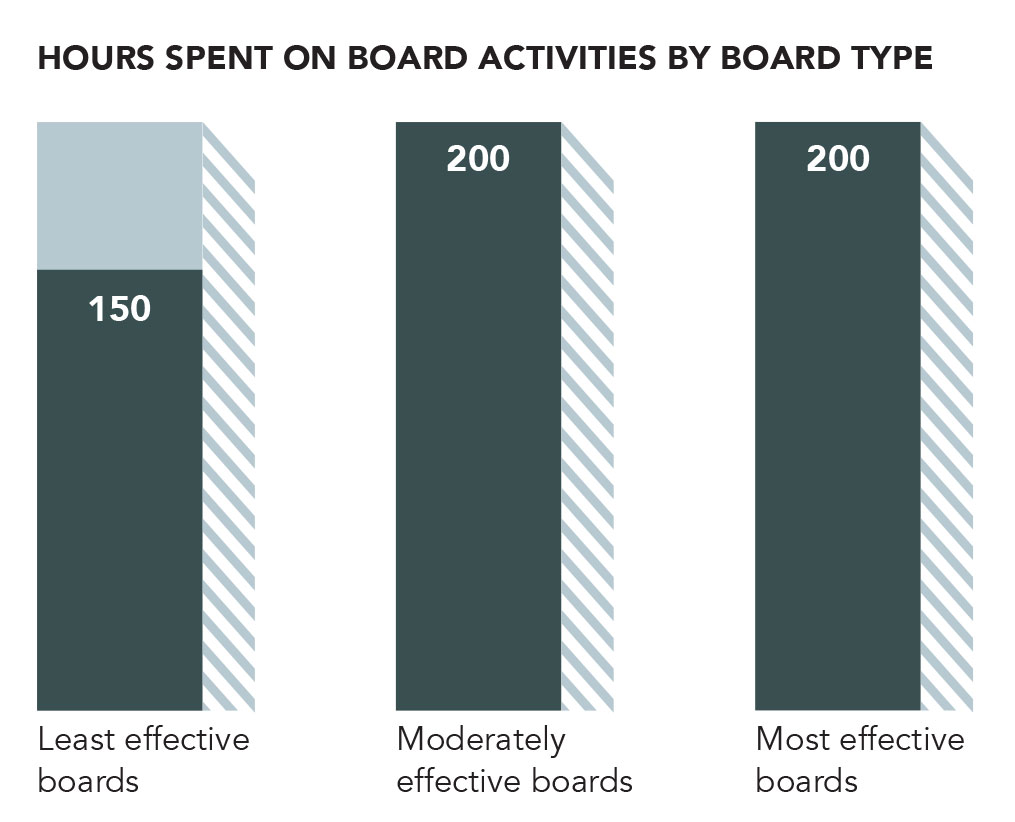
Hours spent on board activities on board type. Source: Russell Reynolds.

“Courage” is the most highly ranked element in boardroom behaviour, according to new research from headhunting firm Russell Reynolds Associates.

After questioning board directors around the world for its 2016 Global Board Culture Survey, Understanding the Behaviors that Drive Board Effectiveness, the firm ranked a list of the most important behaviours. The “…courage to do the right things for the right reasons” came out on top.

The following four were: “willing to constructively challenge management, when appropriate”; “demonstrate sound business judgement”; “ask the right questions”; “possess an independent perspective and avoid ‘groupthink'”.

Russell Reynolds, which questioned 369 directors from large public companies in a dozen countries, said: “Our study uncovered a surprising degree of consistency in the behaviours that directors believe are most critical for an effective board.”

Conclusions

The firm draws two conclusions. First: directors should not focus on the traits expected in any one particular country, but work on the five top qualities almost as a set of universal values. This is because when Russell Reynolds questioned directors who worked on boards both in their home country and abroad, the ranking of the top behaviours remained the same.
Board behaviour 3
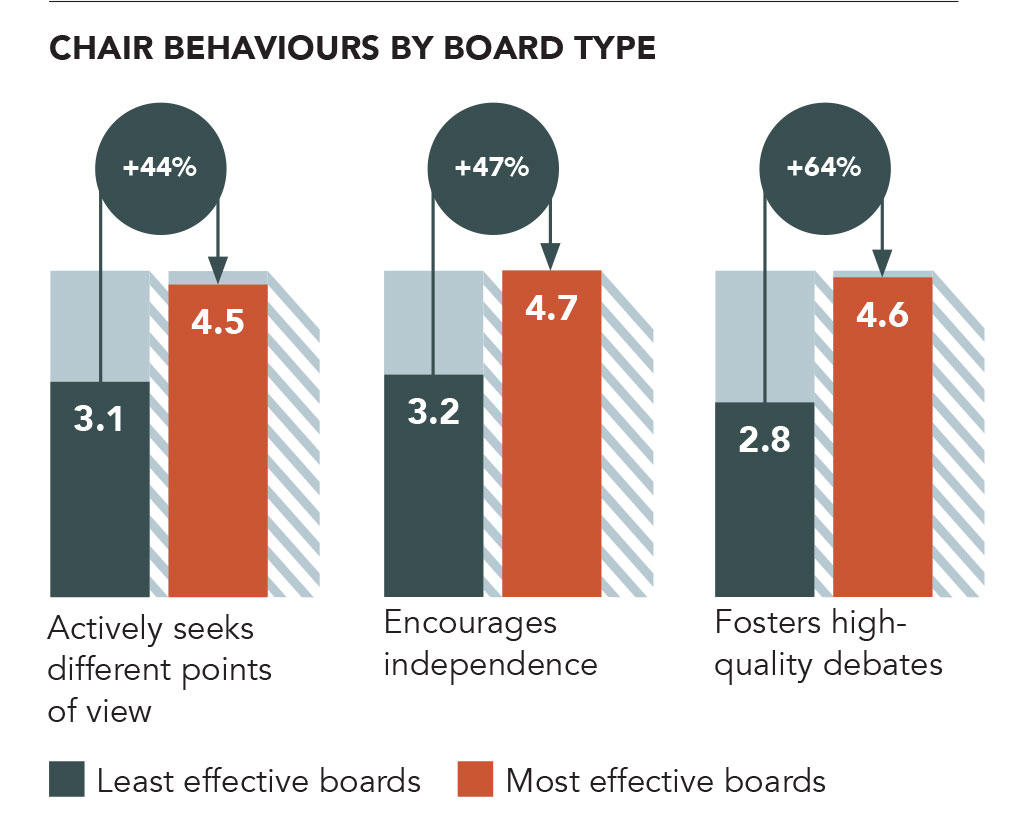
Chair behaviours by board type. Source: Russell Reynolds.

Second, the consistency of behaviours could be taken as evidence that the “board-centric” model of governance—one that heavily emphasises independence and a board’s ability to challenge management—has been widely adopted. This model, Russell Reynolds said, is the one pushed by large institutional investors.

There is support for this view, though it is qualified. Oliver Parry, head of corporate governance at the Institute of Directors, argues that non-executives willing to address difficult subjects are a necessity.

“In this new world order we face in corporate governance…we need to think about [non-executive directors’] ability to constructively challenge the CEO,” Parry said.

But he added that headhunters have a role in improving boards by moving away from lists of the “great and the good” when commissioned to find new board members. That includes ensuring boards are diverse, not only in gender, but in background, age and ethnicity.

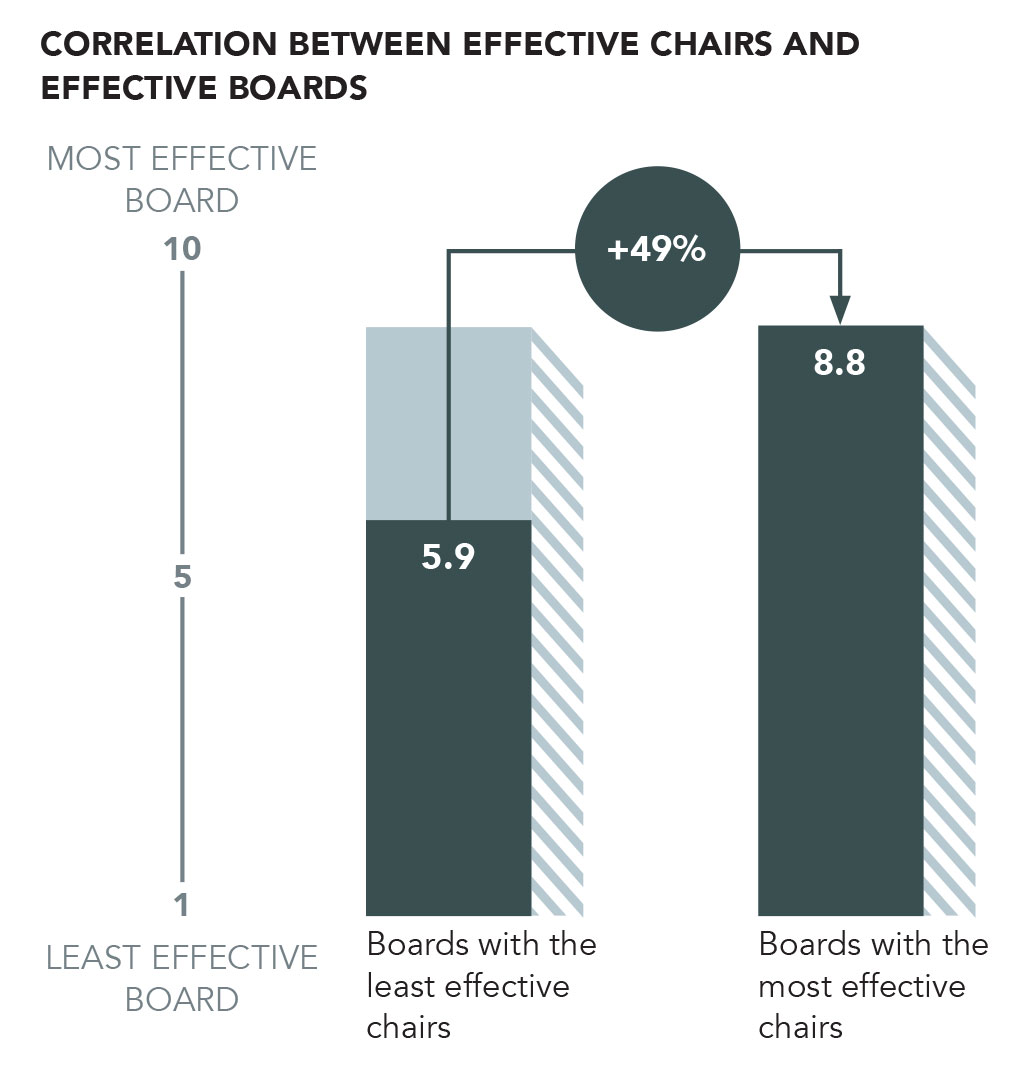
When the research focused on what made for effective boards it drew three observations: a chair who is an effective facilitator; strong relationships with senior management; and a long-term horizon for strategic decision-making.

Short on challenge

There is much agreement that boardroom members value independence and the capacity to challenge management, but some believe there is little challenge going on in practice.

Andrew Kakabadse, a professor of governance and leadership at Henley Business School, said research has consistently shown that boards fail to confront problems.
Effective boards 2
Correlation between effective chairs and effective boards. Source: Russell Reynolds.

He said past research revealed that boards “knew what they should challenge, but they didn’t. So they went back to operational issues with a tick-box mentality”.

He added: “We found the same phenomenon in every part of the world.”

Professor Kakabadse said that “stewardship”, or the ability to facilitate a non-confrontational conversation involving challenge, is missing from many boardrooms. He said that many boards have also become preoccupied with “monitoring”.

“Boards have become overly focused on governance as a protocol, as procedure,” he said. “What happens when you become overly focused on monitoring is that you train your board members not to look at reality.”

Transformation

Meanwhile, Rae Sedel, a member of the Russell Reynolds board of directors, stressed that boards have gone through a transformation.

“It’s significantly changed over the last 15 to 20 years,” she said, adding that boards were now more involved in questioning and debating issues. “There is a desire for boards to contribute, and board members want to contribute,” she added.

She said that board behaviour in continental Europe, the US and the UK had all gone through change. “What’s helped the UK is having independent chairmen—really properly defined chairmen roles. And definitions of independence have helped.

“Those two things have led to boards wanting and expecting to have more expertise on their boards.”

Sedel conceded that search firms could do more to offer candidates with more diverse backgrounds. But she added that boards often demand niche skills and diversity in the same recruit, a request difficult to fulfil because of a dearth of suitable candidates.

“Building the board is a long-term activity, not a one-shot deal,” she said. “We have influence but we don’t control.”

  • Facebook
  • Twitter
  • Google+
  • LinkedIn
  • Mail

Related Posts

  • 5 topics to improve the effectiveness of your board
    May 31, 2022
    notebook on boardroom table

    How many board meetings result in real progress for your company? Make sure these discussion points have a regular spot on the agenda.

  • Performance declines as boards grow in size
    March 7, 2023
    board size

    Researchers found that investment dropped by 2-3 percentage points as companies passed from 12 to 16 board members.

  • Many executives 'fail to understand the role and value of boards'
    May 31, 2022
    Empty boardroom

    A recent webinar on board effectiveness discussed the mix of competence and courage required from non-executive directors.

  • The Secret NED: if your board has problems, don't be a hero
    February 8, 2022
    Superhero CEO overlooking the city

    Even the best non-executives shouldn't presume they can solve all the board's difficulties, especially those symptomatic of wider issues.

Search


Follow Us

Most Popular

Featured Resources

wef global risks 2025

The Global Risks Report 2025

The 20th edition of the Global Risks Report reveals an increasingly fractured global...
Supply chain management cover

Strategic Oversight in Supply Chain Management: A Guide for Corporate Boards 2025

Supply chains have become complex, interdependent and opaque and—according to research...

Cyber Security: What Boards Need to Know

Maintaining firewalls, protecting servers and filtering malicious emails rarely make...

C-suite barometer: outlook 2025 - UK insights

Forvis Mazars draws UK insights from its global study and looks at UK executives’...

The IA’S Principles Of Remuneration 2024 2025

This guidance from the Investment Association is aimed at assisting remuneration...
Diligent 2024 leadership tech cover

Leadership, decision-making & the role of technology: Business survey 2024

This research report by Board Agenda and Diligent sheds light on how board directors...

Director Reference Guide: Navigating Conflict in the Boardroom

The 'Director Reference Guide' on navigating conflict in the boardroom provides practical...
Nasdaq 2024 governance report cover

Nasdaq 2024 Global Governance Pulse

This Nasdaq survey gathered data from more than 870 board members, executives, and...

Becoming a non-executive director (4th edition)

Board composition is the subject of much debate, while the role of the non-executive...
art & science brainloop new cover

The Art & Science of Creating an Effective Board

Boards are coming under more scrutiny and pressure than ever before from regulators,...
SAA First time NED guide

First Time Guide for Non-Executive Directors

The role of the non-executive director has never been more vital: to advise, support,...

SUBSCRIBE TODAY

Stay current with a wide-ranging source of governance news and intelligence and apply the latest thinking to your boardroom challenges. Subscribe


  • Editors & Contributors
  • Editorial Advisory Board
  • Board Advisory & Corporate Services
  • Media Marketing Solutions
  • Contact Us
  • About Us
  • Board Director Network
  • Terms & Conditions
  • Privacy Policy
  • Cookies

Copyright © 2026 Questor Media Group Ltd.

  • Terms & Conditions
  • Privacy Policy