Skip to content

22 April, 2026

  • Saved Articles
  • My Account
  • Subscribe
  • Log In
  • Log Out

Board Agenda

  • Governance
  • Strategy
  • Risk
  • Ethics
  • News
  • Insight
    • Categories

      • View all
      • Governance
      • Strategy
      • Risk
      • Ethics
      • Board expertise
      • Finance
      • Technology
    • AI agents

      The AI risk faced by every board right now

      Even if no one in the organisation planned their arrival, AI agents are already present...

      sustainability litigation

      Is your board at risk of sustainability litigation?

      ESG disclosures, until recently focused on reputational risk and stakeholder expectations, are now becoming legal...

      sustainability Asia

      Navigating sustainability in Asia

      Boards operating across regions need to leave aside assumptions and consider the impact of a...

  • Comment
      • View all
    • AI agents

      The AI risk faced by every board right now

      Even if no one in the organisation planned their arrival, AI agents are already present...

      sustainability litigation

      Is your board at risk of sustainability litigation?

      ESG disclosures, until recently focused on reputational risk and stakeholder expectations, are now becoming legal...

      investor confidence

      Lack of audit reform ‘will hit investor confidence’

      Government's failure to push ahead with audit reform is a risk to UK investments, the...

  • Interviews
      • View All Interviews
      • Podcasts
      • Webinars
    • future-ready

      Is your board ‘future-ready’?

      The survival of a business in uncertain times depends on its ability to pivot as...

      investor confidence

      Lack of audit reform ‘will hit investor confidence’

      Government's failure to push ahead with audit reform is a risk to UK investments, the...

      stewarding AI

      AI is a ‘special case for governance’

      As AI use in the boardroom grows, it’s essential to focus on the ethical and...

  • Board Careers
      • View All
    • female CEO

      Number of women in leadership stays unchanged

      In 2021, there were only eight female CEOs in the FTSE 100—a figure that is...

      female NED

      UK female non-executives earn £73k less than male NEDs

      Although the UK’s average gender pay gap on boards is shrinking, it is still one...

      directors duties

      3 top tips on directors’ duties

      When directors fall short of their responsibilities, the consequences can be devastating. How can board...

  • Resource Centre
      • White Paper Downloads
      • Book Reviews
      • Board Advisory & Corporate Services
    • FRC audit approach cover march 2026

      An evolved audit supervision approach 2026

      The Financial Reporting Council outlines its revised approach to audit supervision, which focuses on firms’...

      Protiviti 2026 governance AI

      The Board’s AI Moment, 2026

      This report, from Protiviti’s 2026 Global Board Governance Survey results, focuses on artificial intelligence.

      HEIDRICK GOVERNANCE 2026

      Governing Under High Uncertainty: Opportunities for Emerging-Market Boards

      This report from Boston Consulting Group, Heidrick & Struggles and INSEAD examines how boards are...

  • Events
  • Search by topic
    • Governance
    • Strategy
    • Risk
    • Ethics
    • Regulation
    • ESG
    • Investor Relations
    • Careers
    • Board Expertise
    • finance
    • Technology

How blockchain can create more resilient supply chains in the post-Covid recovery

by Nadia Hewett, Jonas Sveistrup Sogaard and Rasmus Winther Molbjerg

Blockchain improves the integrity of supply chains by providing companies and consumers with transparent and secured data.

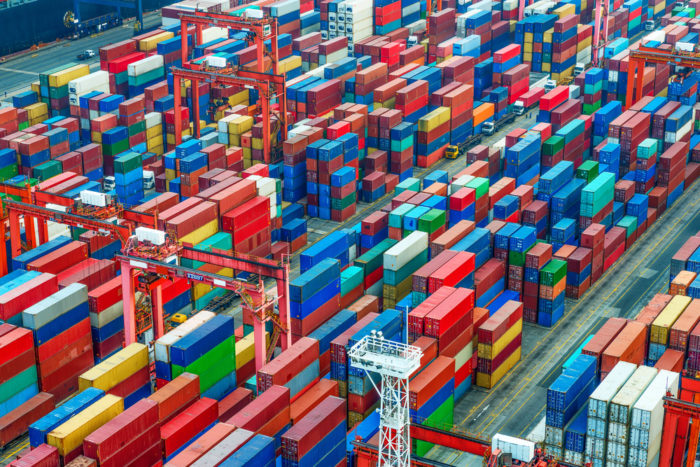
shipping containers

Image: Hxdyl/Shutterstock

Favorite

The Covid-19 crisis has rattled supply chains around the globe and created serious questions about the future of commerce. Critical to recovery and restoring economic activity is regaining trust in these systems. This challenge presents an opportunity for the integration of blockchain, a technology with the potential to fundamentally alter the future of supply chains.

Though digitisation has driven transaction costs down significantly, most business domains still operate in silos, creating accounting discrepancies that need to be aligned.

The need to process transactions quickly and verify the creation, transmission and reception of a particular exchange of value is ever more critical to business success. To make a supply chain resilient, there must be transparency and integrity across domains, which can be improved through the deployment of blockchain technologies.

To make a supply chain resilient, there must be transparency and integrity across domains

Production companies around the world are increasingly faced with demands for more transparency from their customers. Take, for example, concerns about food safety from two key groups: consumers and tax officials.

The consumer wants proof of the product’s source and the treatment of foods. Tax officials need further classification of a product and knowledge of the jurisdictions it has passed through, as well as a certificate of arrival to get it through customs and apply the right duties. Adding to these obstacles, the Covid-19 pandemic has made certain processes especially laboured, as typical channels face disruption from mandated lockdowns and disrupted business activity.

To rebuild disrupted networks, trust and the ability to verify information will be essential. Blockchain technology offers the building blocks to provide trading partners and consumers the transparency of trusted and secured data, and to synchronise processes through a mutually agreed ruleset. This potential is especially attractive for businesses contending with supply chain disruption due to the pandemic.

Start where the transaction is created

The best place to begin implementing blockchain is where the transaction, event or milestone is created. For many companies, this means using supply chain data, specifically purchase order and stock-keeping units (SKU), and becoming a part of a supply chain blockchain network. The unique features offered by blockchain technology (shared version of truth, for instance) provides companies with the ability to improve the track and trace abilities of their shipments to answer critical questions such as:

  • Where is the shipment? When will it arrive?
  • Were there any issues in the route such as excess temperature, custom delays, etc.?
  • Who is responsible for the delay? Who is liable in this dispute resolution?

What I see is what you see

With distributed technology, answers to these questions are synchronised as “what I see is what you see”. Blockchain can also be used to track and verify data relating to the provenance of a product for use by the end-purchaser or consumer.
With blockchain, the physical (product/goods flow) and digital (information flow) supply chain are better connected with the financial side of a transaction.

Documentation and data relating to the transaction can all be triggered and visible as a single source of truth

With blockchain technology entering the space, access to trade finance, insurance and supply chain finance is increasingly integrated within the supply chain and can be transferred seamlessly. In addition, documentation and data relating to the transaction, such as the purchase and sales orders, can all be triggered and visible as a “single source of truth” to the respective trading partners and without the need for an intermediary.

This eliminates most of the manual reconciliations that buyers and suppliers do today and the need for control towers or third or fourth-party logistic systems. Based on the sheer nature of near-real time processing and transparency of data across the enterprise ecosystem, blockchain can help organisations optimise their operational costs and improve working capital.

Trust, transparency and perceived value

The unique value of using blockchain in supply chains can be illustrated by an implementation by Danish Crown, the world’s largest exporter of pork. Danish Crown’s goal was to grow in the Chinese market. To do so, they wanted to understand which considerations drive consumer purchasing decisions for meat.

As a first step, Danish Crown fielded an extensive consumer study, which found that producers capable of digitally assuring consumers of the safety and provenance of their products enjoyed increased brand recognition and greater perceived value.

With this insight in mind, Danish Crown teamed up with supply chain and consulting partners to implement a blockchain-based system that allows end-consumers to scan and verify the authenticity of a meat package in the supermarket or at home, through WeChat. The solution also provides a unique, product-level overview of food safety information that addresses primary consumer concerns related to meats in China.

Through the use of blockchain technology, Danish Crown developed a solution to deliver transparent, traceable information in a meaningful way to Chinese consumers and demonstrate the authenticity and quality of its product. This has given them a foundation to expand their other business domains.

Leveraging blockchain in the ‘new normal’

Though early implementation has been gradual, blockchain technology provides a transformative means to make supply chains more resilient. Whether it’s hospital systems procuring PPE or grocers acquiring meat products, now more than ever, supply chains are dependent on trust, transparency, and resilience. These factors could determine the speed and smoothness of economic recovery. As we chart a path forward beyond the Covid-19 crisis, blockchain has the potential to contribute to a more equitable system of commerce for producers and consumers alike.

Nadia Hewett is project lead, blockchain and distributed ledger technology at the World Economic Forum.

Jonas Sveistrup Søgaard is an industrial PhD at Deloitte Denmark.

Rasmus Winther Mølbjerg is a director at Deloitte Denmark.

This article first appeared on Forbes.com and the World Economic Forum website. Read the original article.

  • Facebook
  • Twitter
  • Google+
  • LinkedIn
  • Mail

Related Posts

  • Pandemic 'opened door' to the use of new boardroom technology
    August 27, 2021
    Man working remotely

    A recent webinar hosted by Board Agenda and Diligent explored the ways boards are using technology to enhance effectiveness.

  • UN calls for 'culture change' to improve human rights in supply chains
    December 3, 2021
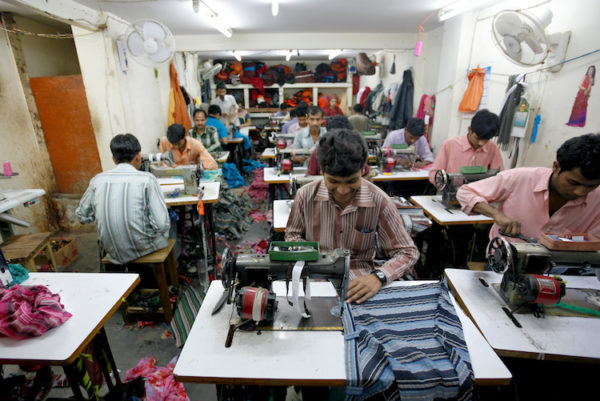
    Factory in Delhi making clothes for western companies

    Push for due diligence comes as part of a roadmap aiming to embed use of the UN’s Guiding Principles on Business and Human Rights.

  • Technology, cyber risk and ESG top list of business leaders' concerns
    June 8, 2022
    Digital code on skycrapers

    Mazars survey reveals 82% of executives plan to increase investment in IT systems, while 75% plan to boost spending on sustainability.

  • Boards 'face data challenge' as digital tools transform governance
    October 2, 2021
    Digital code on skycrapers

    Directors must learn how to harness and analyse the vast quantities of data that are being created and collected by organisations.

Search


Follow Us

Most Popular

Featured Resources

wef global risks 2025

The Global Risks Report 2025

The 20th edition of the Global Risks Report reveals an increasingly fractured global...
Supply chain management cover

Strategic Oversight in Supply Chain Management: A Guide for Corporate Boards 2025

Supply chains have become complex, interdependent and opaque and—according to research...

Cyber Security: What Boards Need to Know

Maintaining firewalls, protecting servers and filtering malicious emails rarely make...

C-suite barometer: outlook 2025 - UK insights

Forvis Mazars draws UK insights from its global study and looks at UK executives’...

The IA’S Principles Of Remuneration 2024 2025

This guidance from the Investment Association is aimed at assisting remuneration...
Diligent 2024 leadership tech cover

Leadership, decision-making & the role of technology: Business survey 2024

This research report by Board Agenda and Diligent sheds light on how board directors...

Director Reference Guide: Navigating Conflict in the Boardroom

The 'Director Reference Guide' on navigating conflict in the boardroom provides practical...
Nasdaq 2024 governance report cover

Nasdaq 2024 Global Governance Pulse

This Nasdaq survey gathered data from more than 870 board members, executives, and...

Becoming a non-executive director (4th edition)

Board composition is the subject of much debate, while the role of the non-executive...
art & science brainloop new cover

The Art & Science of Creating an Effective Board

Boards are coming under more scrutiny and pressure than ever before from regulators,...
SAA First time NED guide

First Time Guide for Non-Executive Directors

The role of the non-executive director has never been more vital: to advise, support,...

SUBSCRIBE TODAY

Stay current with a wide-ranging source of governance news and intelligence and apply the latest thinking to your boardroom challenges. Subscribe


  • Editors & Contributors
  • Editorial Advisory Board
  • Board Advisory & Corporate Services
  • Media Marketing Solutions
  • Contact Us
  • About Us
  • Board Director Network
  • Terms & Conditions
  • Privacy Policy
  • Cookies

Copyright © 2026 Questor Media Group Ltd.

  • Terms & Conditions
  • Privacy Policy