Skip to content

13 April, 2026

  • Saved Articles
  • My Account
  • Subscribe
  • Log In
  • Log Out

Board Agenda

  • Governance
  • Strategy
  • Risk
  • Ethics
  • News
  • Insight
    • Categories

      • View all
      • Governance
      • Strategy
      • Risk
      • Ethics
      • Board expertise
      • Finance
      • Technology
    • AI agents

      The AI risk faced by every board right now

      Even if no one in the organisation planned their arrival, AI agents are already present...

      sustainability litigation

      Is your board at risk of sustainability litigation?

      ESG disclosures, until recently focused on reputational risk and stakeholder expectations, are now becoming legal...

      sustainability Asia

      Navigating sustainability in Asia

      Boards operating across regions need to leave aside assumptions and consider the impact of a...

  • Comment
      • View all
    • AI agents

      The AI risk faced by every board right now

      Even if no one in the organisation planned their arrival, AI agents are already present...

      sustainability litigation

      Is your board at risk of sustainability litigation?

      ESG disclosures, until recently focused on reputational risk and stakeholder expectations, are now becoming legal...

      investor confidence

      Lack of audit reform ‘will hit investor confidence’

      Government's failure to push ahead with audit reform is a risk to UK investments, the...

  • Interviews
      • View All Interviews
      • Podcasts
      • Webinars
    • future-ready

      Is your board ‘future-ready’?

      The survival of a business in uncertain times depends on its ability to pivot as...

      investor confidence

      Lack of audit reform ‘will hit investor confidence’

      Government's failure to push ahead with audit reform is a risk to UK investments, the...

      stewarding AI

      AI is a ‘special case for governance’

      As AI use in the boardroom grows, it’s essential to focus on the ethical and...

  • Board Careers
      • View All
    • female CEO

      Number of women in leadership stays unchanged

      In 2021, there were only eight female CEOs in the FTSE 100—a figure that is...

      female NED

      UK female non-executives earn ÂŁ73k less than male NEDs

      Although the UK’s average gender pay gap on boards is shrinking, it is still one...

      directors duties

      3 top tips on directors’ duties

      When directors fall short of their responsibilities, the consequences can be devastating. How can board...

  • Resource Centre
      • White Paper Downloads
      • Book Reviews
      • Board Advisory & Corporate Services
    • FRC audit approach cover march 2026

      An evolved audit supervision approach 2026

      The Financial Reporting Council outlines its revised approach to audit supervision, which focuses on firms’...

      Protiviti 2026 governance AI

      The Board’s AI Moment, 2026

      This report, from Protiviti’s 2026 Global Board Governance Survey results, focuses on artificial intelligence.

      HEIDRICK GOVERNANCE 2026

      Governing Under High Uncertainty: Opportunities for Emerging-Market Boards

      This report from Boston Consulting Group, Heidrick & Struggles and INSEAD examines how boards are...

  • Events
  • Search by topic
    • Governance
    • Strategy
    • Risk
    • Ethics
    • Regulation
    • ESG
    • Investor Relations
    • Careers
    • Board Expertise
    • finance
    • Technology

Governance week: Rio Tinto, ESG, climate risk, Aussie audit

by Gavin Hinks on September 11, 2020

Investors lead backlash against Rio Tinto over destruction of Aboriginal sites. Plus a warning from ecoDa on sustainability, and analysis of Australia’s audit market.

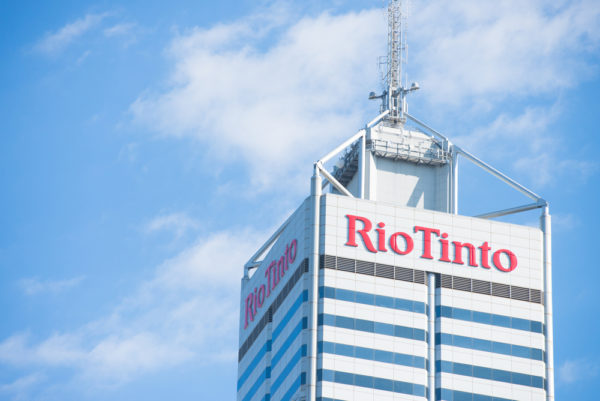
Rio Tinto

Image: Rob Bayer/Shutterstock.com

Favorite

Fallout for Rio Tinto

The equivalent of going nuclear in governance is clearing out a company’s leadership. This week investors managed to detonate a bomb under Rio Tinto when the chief executive, Jean-SĂ©bastien Jacques, resigned over the destruction of Aboriginal cultural sites in Australia. Two other senior executives are also set to leave the company.

Calls for the CEO’s departure emerged in early August after Rio Tinto destroyed caves at Juukan Gorge, a site used as shelter by Aboriginal people for thousands of years. Reports suggest the company was aware of their significance. The caves were destroyed as part of an expansion of iron ore mining operations.

The episode demonstrates that the shift in ESG issues has incorporated culturally significant locations and companies that exploit natural resources cannot assume they have free rein. The days when multinationals could ride out any public backlash appear to be over.

US vs ESG

In Washington, current debate centres around an effort to impose further regulation on proxy advisers. The latest episode comes after the US Department of Labor (DoL) proposed new rules viewed by many as undermining the ability of proxy advisers to vote on any issue other than financials. In other words, no voting on ESG topics.

The reaction has been emphatic. Writing for the Harvard Law School governance blog, Brian Tomlinson of Chief Executives for Corporate Purpose, a pressure group, says: “The proposed rule is unnecessary and represents a confused understanding of ESG and its role in mainstream investment analysis.” He adds: “The rule does not address the imperative of long-term value creation and the key insights ESG provides for assessing long-term corporate resilience.”

The drive for ESG performance and sustainability remains a contested issue in the US. Time may be running out for the planet while politicians, regulators, investors and business leaders resolve their differences.

An unsustainable trend

ESG remains a concern here in Europe too, despite the generally more sympathetic approach to the topic. The European Commission has, in recent reports, worried that companies remain too “short term” in their thinking, and the mindset is an obstacle to implementing the UN’s Sustainable Development Goals and the Paris Agreement on climate.

This week, ecoDa, the European association for institutes of directors, and Mazars, the business advisers, issued a joint report looking at the road to a “wholehearted” adoption of sustainability by business. There is progress but also a host of problems, including a lack of standard definition of sustainability; a trend towards a “tick-box” approach for many; sustainability being treated as a separate issue to core business strategy; poor quality reporting; a lack of commitment from fund managers; and a lack of agreed benchmarks.

Boards are also a problem, they conclude.

“In businesses where sustainability is seen as separate from the core strategy, the board’s emphasis tends to be on short-term financial performance, leaving sustainability considerations without much attention at the board level,” the report says.

Risks and rights

Climate risk is an issue highlighted by research published this week by KPMG. Only 8% of boards, the firm says, have a fully-fledged climate risk plan. That’s a worry, and one underlined by Board Agenda’s own survey at the beginning of the year which found in a list of nine risks to address, boards generally placed climate last.

And while big corporates may be slow in coming to terms with tackling climate change, despite its permanent position in news headlines, companies do appear to be buying into another sustainability issue.

This week it emerged that 26 household name companies—among them Adidas, NestlĂ© and Aldi—have signed a letter in support of the European Union introducing mandatory human rights due diligence.

“Mandatory human rights and environmental due diligence is key to ensure that efforts by companies that respect people and the planet, both during and post Covid-19 recovery, are not undercut by the lack of a uniform standard of conduct applying to all business actors,” they write.

Big Three?

Lastly, audit and auditors are never far from a discussion of corporate governance. A report this week from academics at the Melbourne Centre for Corporate Governance Regulation suggest the Big Four in Australia is really a Big Three because Deloitte has so little of the audit market. The firm has a 6.9% share of the ASX 300 and 1.5% of the ASX 20, Australia’s largest firms.

Researchers Ian Gow and Thomas Barry suggest this may mean a deepening of competition problems in the audit market. Though lagging in audit, Deloitte is second overall in the Big Four stakes, buoyed up by revenues from advisory services.

“A concern for regulators and users of financial statements would be that its weak position in auditing is a result of strategic choices,” they write. “If a Big Four firm audits a company, its ability to offer advisory services is limited by auditor independence requirements. If one of the Big Four were choosing advisory work over auditing, then competition might be even less than it appears.”

  • Facebook
  • Twitter
  • Google+
  • LinkedIn
  • Mail

Related Posts

  • Audit committees name ESG reporting as top agenda item
    February 14, 2023
    corporate reporting

    US audit committees are focused on sustainability reporting despite ESG becoming a point of friction in US politics.

  • Rio Tinto report reveals culture of sexual harassment, bullying and racism
    February 3, 2022
    Rio Tinto

    Over a third of young female workers have been sexually harassed, with bullying “systemic” and racism "normalised" in some parts of the firm.

  • Corporate governance code review boosts internal controls
    May 25, 2023
    boost audit

    UK watchdog’s proposals include giving audit committees greater reporting responsibilities and addressing ‘overboarding’.

  • IoD: Don’t make audit committees accountable for ESG reporting
    September 8, 2023
    IoD governance

    The Institute of Directors says the FRC proposal on board governance means ‘lines of accountability will be blurred’.

Search


Follow Us

Most Popular

Featured Resources

wef global risks 2025

The Global Risks Report 2025

The 20th edition of the Global Risks Report reveals an increasingly fractured global...
Supply chain management cover

Strategic Oversight in Supply Chain Management: A Guide for Corporate Boards 2025

Supply chains have become complex, interdependent and opaque and—according to research...
OB-Cyber-Security

Cyber Security: What Boards Need to Know

Maintaining firewalls, protecting servers and filtering malicious emails rarely make...

C-suite barometer: outlook 2025 - UK insights

Forvis Mazars draws UK insights from its global study and looks at UK executives’...

The IA’S Principles Of Remuneration 2024 2025

This guidance from the Investment Association is aimed at assisting remuneration...
Diligent 2024 leadership tech cover

Leadership, decision-making & the role of technology: Business survey 2024

This research report by Board Agenda and Diligent sheds light on how board directors...

Director Reference Guide: Navigating Conflict in the Boardroom

The 'Director Reference Guide' on navigating conflict in the boardroom provides practical...
Nasdaq 2024 governance report cover

Nasdaq 2024 Global Governance Pulse

This Nasdaq survey gathered data from more than 870 board members, executives, and...

Becoming a non-executive director (4th edition)

Board composition is the subject of much debate, while the role of the non-executive...
art & science brainloop new cover

The Art & Science of Creating an Effective Board

Boards are coming under more scrutiny and pressure than ever before from regulators,...
SAA First time NED guide

First Time Guide for Non-Executive Directors

The role of the non-executive director has never been more vital: to advise, support,...

SUBSCRIBE TODAY

Stay current with a wide-ranging source of governance news and intelligence and apply the latest thinking to your boardroom challenges. Subscribe


  • Editors & Contributors
  • Editorial Advisory Board
  • Board Advisory & Corporate Services
  • Media Marketing Solutions
  • Contact Us
  • About Us
  • Board Director Network
  • Terms & Conditions
  • Privacy Policy
  • Cookies

Copyright © 2026 Questor Media Group Ltd.

  • Terms & Conditions
  • Privacy Policy