

The 2020 Edelman Trust Barometer—surveying 34,000 people in 28 countries—showed that 74% of people expect their CEOs to take the lead on change to address global issues. In the context of Covid-19, a follow-up survey with 10,000 people in 10 countries re-affirms that people trust their employers to respond effectively and responsibly to the pandemic, and 78 percent want businesses to act to protect employees and local communities.
I spoke with four experts on the role of businesses in the context of the global virus: Peter Bakker (president and CEO of the World Business Council for Sustainable Development—WBCSD), Lise Kingo (CEO and executive director of the United Nations Global Compact), David Nabarro (Professor of Global Health at Imperial College, WHO Special Envoy for Covid-19 and former Special Adviser to the United Nations Secretary-General on the 2030 Agenda for Sustainable Development) and Dr Anthony Renshaw (INSEAD GEMBA’14, medical director at International SOS).
First, they pointed to firms’ duty of care which goes beyond the health and safety of employees to secure employment continuity. Second, they highlighted the key role of organisations in providing medically verified information to employees—largely because employer communication is the most credible source of information about Covid-19. Third, they suggested that businesses find ways to support health systems. The WBCSD lists corporate examples on its website, and the UN Global Compact calls on business leaders to support workers and communities.
Main responsibilities
So, what should businesses be focusing on during this crisis? According to Renshaw, there are three main areas where companies have a huge role to play. First, business should provide accurate information and guidance to staff. “There will be some countries that businesses are operating in, where the employer is essentially the only voice of health communication to those workers. So ensuring the workers get access to medically verified information sources is key,” he explained.
—Dr Anthony Renshaw, International SOS
Second, businesses should support and provide all necessary assistance to staff who are travelling, even more so during this crisis. The third is for firms to ensure “that their planning includes specific reference to public health issues,” by considering possible quarantine, isolation, positive cases in the workplace and examining whether they can assist in contact tracing.
Bakker shared that WBCSD, a global organisation of over 200 leading businesses working together towards sustainability, has taken action by putting people at the centre of their response—by ensuring employee safety through remote work, staying connected and also creating a website for their network to communicate and inspire others to follow suit.
Citing the influence of businesses in helping contain the virus, Nabarro pointed out, “If people are being expected to act, they need to be guided and supported and businesses have an amazing capacity through their brands, and their links with customers to connect with people and to support them as they are forming solidarity groups in their communities.” Encouraging all business leaders, Nabarro added they should examine how and where they can contribute not just to their firm, but also to their society.
The SME predicament
While corporations will have their own operations and systems in place to brace themselves and get through the pandemic, where does that leave small- to mid-size enterprises which may be more vulnerable? Kingo shared that the UN Global Compact, a voluntary initiative that aims to unite businesses through encouraging sustainability, is close to the SMEs on the ground, and provides support through their 70 global chapters. Organising webinars, video conferences and having discussions on best practices can help SMEs in their network learn how to navigate the uncertainty ahead.
—Dr David Nabarro, Imperial College
Furthermore, the UN Global Compact members are witnessing various examples of larger corporations that are also sharing their advice and tips on how to survive and stay in business in the long run. In line with this, Kingo encouraged companies to be “aware of their global supply chain in ensuring they are doing everything they can to support small and medium-sized suppliers”.
Renshaw advised SMEs to function as an emissary within the community by “proving balanced communications, helping their employees, and by helping their local communities in whatever way possible.” He added that if an enterprise is still able to operate, then it should use the opportunity to adjust practices to align with the current situation. For example, opening times could be adjusted to support the elderly or the manufacturing processes could be modified to address the supplies needed by health systems.
According to Nabarro, all businesses should see themselves as part of the response, and small businesses have an important role to play, given their ability to connect well within their communities. Small retailers can give priority to the needs of health workers in order to ensure they have access to the supplies required, and transport service providers can also prioritise the needs of health workers, and others who are on the frontlines. “See yourself as very much part of ensuring that priority activity can be maintained.” Highlighting that members of society should also help keep businesses functioning during these difficult times, he added: “We need to rally around and support them.”
Corporate and societal responsibility
With the crisis, we need to be prepared for a future that will not look like our past. It’s crucial for us to learn, rethink and reinvent business models and social contracts in order to move forward successfully. “How do we better prepare our supply chains and the buffers in capital markets, and the resilience of people for shocks like this?” Bakker reflected. His answer is to move to a model of integrated capitalism while supporting the most vulnerable and exposed within our communities.
—Peter Bakker, WBCSD
“It is safe to say that more of these environmental pressures will create more of these shocks in the future. This is the ultimate stress-test of whether we are ready. Resilience needs to become a much bigger factor,” Bakker added. Adding that the bottom line should not be the sole driver for an economic model, he stressed the importance of serving the people and the planet, instead of caving into solely financial pressures. “I’m hoping people see this as a clear warning shock that the power of nature, in this case a pandemic, is still so much stronger than any construct that humans have created. That we fundamentally take the time to rethink how to be better prepared for future shocks.”
For society at large, Nabarro highlighted the importance of communities. Explaining how people at home could help, he advised that we invest time in forming groups within our apartments and estates to support the elderly, disabled and other vulnerable groups. “Form solidarity groups in your community, and make sure you are kept up to date with the information from authorities.” Citing examples where the virus was better contained, he observed it was not just because of strong government action, but the partnership between governments and their communities.
Speaking with the experts close to the developments reminds us that while we may be at the mercy of the current pandemic, it does not render us completely helpless. There is still action that businesses can take to keep employees safe and contribute to the bigger picture, while thinking of and prioritising the needs of the health workers and the vulnerable where possible. None of us should underestimate the strength of our communities to uplift one another, so that we come out of this stronger and better prepared to rebuild towards a sustainable future.
Katell Le Goulven is the executive director of the Hoffmann Global Institute for Business and Society at INSEAD.
This article first appeared on INSEAD Knowledge and is reproduced with permission. View the original article.
Related Posts
-
April 6, 2022
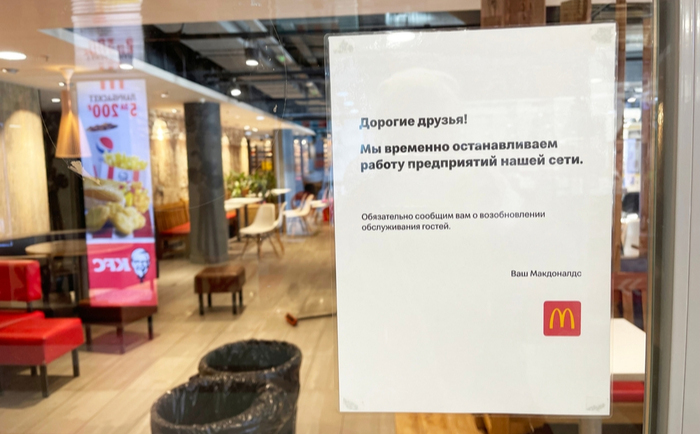
McDonald’s, IKEA, Apple are some of the well-known corporations making a stand against Russia. And this is about more than just good PR.
-
August 25, 2021
Harvard researchers say signatories have made few changes in company documents that indicate a corporate purpose favouring stakeholders.
-
October 7, 2022

Board Agenda's research aims to lift the lid on trends in board oversight, implementation and disclosure of ESG.
-
August 24, 2023

The ESG label is ‘politicised, simplistic and restrictive’ and should be jettisoned, believes senior academic.