

Skip to content

20 May, 2026

  • Saved Articles
  • My Account
  • Subscribe
  • Log In
  • Log Out

Board Agenda

  • Governance
  • Strategy
  • Risk
  • Ethics
  • News
  • Insight
    • Categories

      • View all
      • Governance
      • Strategy
      • Risk
      • Ethics
      • Board expertise
      • Finance
      • Technology
    • senior executives

      How senior executives help boards form judgement

      Senior executives below the C-suite can provide critical board insight—if access is built on trust,...

      venture capital startup

      How venture capital boosts good governance

      It’s not merely financial support: venture capital expertise can put an early-stage business in the...

      AIM diversity

      AIM’s failure to act on diversity threatens governance

      The alternative investment market is not keeping pace on gender diversity, to the detriment of...

  • Comment
      • View all
    • senior executives

      How senior executives help boards form judgement

      Senior executives below the C-suite can provide critical board insight—if access is built on trust,...

      early warning

      Are you ignoring a crucial early warning system?

      When organisations choose to silence those who question corporate actions, it is bad for society—and...

      venture capital startup

      How venture capital boosts good governance

      It’s not merely financial support: venture capital expertise can put an early-stage business in the...

  • Interviews
      • View All Interviews
      • Podcasts
      • Webinars
    • future-ready

      Is your board ‘future-ready’?

      The survival of a business in uncertain times depends on its ability to pivot as...

      investor confidence

      Lack of audit reform ‘will hit investor confidence’

      Government's failure to push ahead with audit reform is a risk to UK investments, the...

      stewarding AI

      AI is a ‘special case for governance’

      As AI use in the boardroom grows, it’s essential to focus on the ethical and...

  • Board Careers
      • View All
    • AIM diversity

      AIM’s failure to act on diversity threatens governance

      The alternative investment market is not keeping pace on gender diversity, to the detriment of...

      UK and US CEO

      Corporate shift toward experienced CEOs

      Leadership succession shows fewer first-time chief executives, especially in the US, according to turnover figures.

      female CEO

      Number of women in leadership stays unchanged

      In 2021, there were only eight female CEOs in the FTSE 100—a figure that is...

  • Resource Centre
      • White Paper Downloads
      • Book Reviews
      • Board Advisory & Corporate Services
    • board's role in a rewired world fgs 2026 cover

      A hard job getting harder: The board’s role in a rewired world

      The role of director is demanding intellectually, ethically and strategically. FGS interviewed 175 experts and...

      Internal Control Failure!

      This Chartered IIA report analyses FCA enforcement action and examines cases where weaknesses in internal...

      European Corporate Governance Barometer 2026

      EcoDa's report highlights emerging governance challenges for European boards, such as technology, cyber risk and...

  • Events
  • Search by topic
    • Governance
    • Strategy
    • Risk
    • Ethics
    • Regulation
    • ESG
    • Investor Relations
    • Careers
    • Board Expertise
    • finance
    • Technology

Why audit committees worry about risk management systems

by Kevin Reed on March 22, 2017

Audit committees are worried that boards have failed to grasp the risk nettle. Diversity of thought, and agility to react to change, should be central to good governance.

risk management

Photo: Shutterstock

Favorite

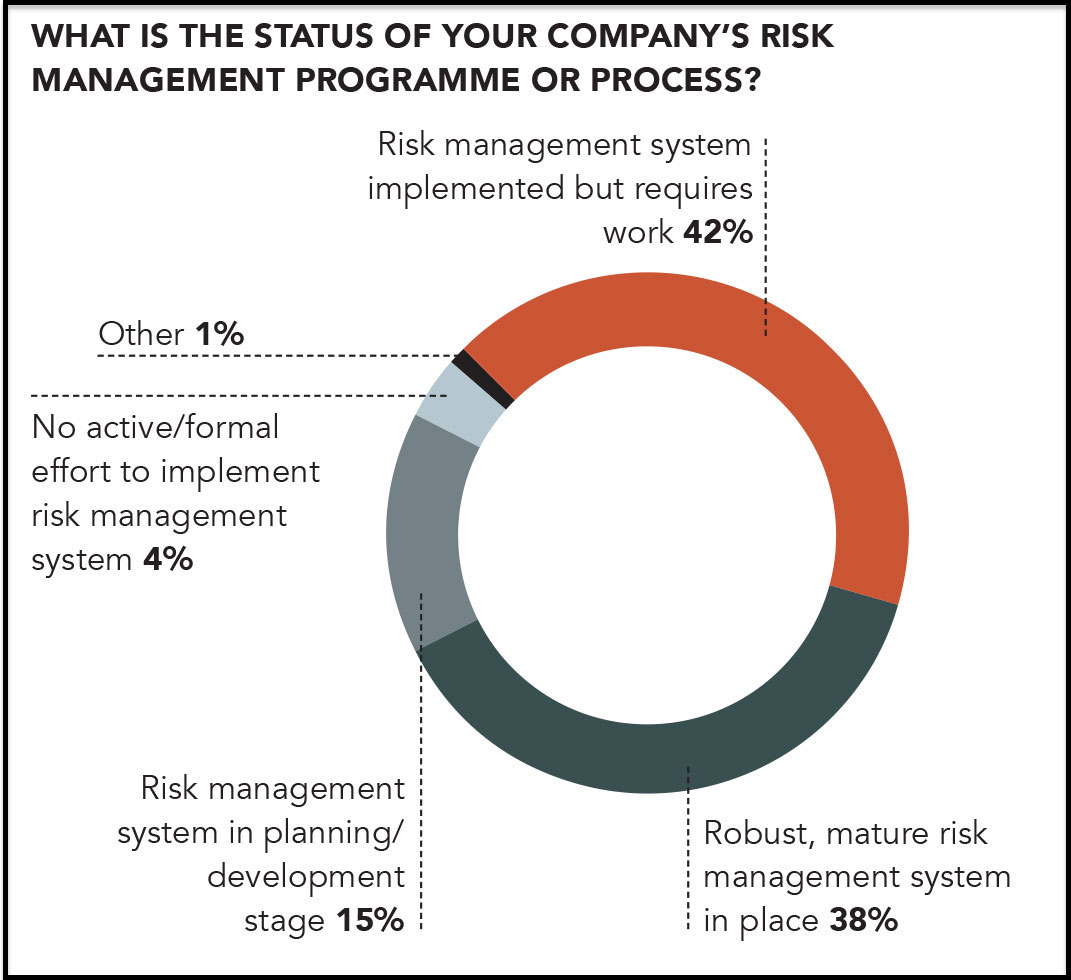
A considerable number of audit committee members believe their organisation’s risk management system requires “substantial work”.

This sobering conclusion comes from KPMG’s Audit Committee Institute, which surveyed more than 800 non-executives from 42 countries across the globe.

The 2017 Global Audit Committee Pulse Survey found that 42% see a requirement for much more effort to be placed upon risk systems and processes. In a world of economic and political uncertainty, technological advances, cyber-threats and market disruption, audit committee members are worried their companies have failed to fully grasp the nettle of both short and long-term priorities.

Warning signs of a lack of focus on risk management for non-executives include: presentations to the board that focus too heavily on historical issues or short-term topics; an infrequency of discussion of emerging risks and opportunities; incentive compensation plans tied strongly to short-term goals and metrics; and a lack of focus on assessing non-financial performance such as product/service quality and customer satisfaction.

Audit committee members in emerging economies are generally more fearful, with half of respondents in India and Turkey calling for more effort on risk management, for example.

KPMG associate partner Tim Copnell says that developed nations, including the UK and US, fare better, at 26% and 36% respectively. However, these are still significant proportions.

Velocity of change

Copnell flags up three key issues that are leading to a gap in risk assurance. Firstly, there is too much focus on financial risks rather than operational and regulatory/compliance risks. “There is a question over whether risk management systems look as wide as they should,” he explains.

Secondly, the “velocity” of risk has increased exponentially. Disruptive market players and reputational problems, for example, can emerge within hours or days rather than in months or years.
Source: KPMG

Lastly, these problems are exacerbated if boards fail to grasp that the world is fundamentally different to that of ten years ago, or even 12 months ago.

And it is in the construction of these boards that Copnell sees fault lines. “Do people really understand the risks from tech and changing business models?” he asks. “They can be hard to comprehend, particularly for boards that were probably constructed for a different century.”

With the average age of non-executive directors at 60, and 53 for executives, can they comprehend the future and understand the wants and needs of the next generation?

Board diversity therefore should be a critical focus, Copnell believes. “Do they think in the same way as the next generation? If they don’t think that way, do they see the risks coming? The future is going to be very different from the past.”

Agility and proactivity

Paul Moxey, a consultant and visiting professor at London South Bank University, says operational and process-led risks can be managed in a traditional, rules-based method.

Strategic risks require a more systemic approach to make them less likely to occur. “There are all sorts of things going on in the world that could test their resilience,” says Moxey. “So think about business continuity: what are the potential ‘big unknowns’? How might they coalesce? You must plan scenarios.”

While not all risks can be divined, the ability to act quickly to minimise a threat is a key
Source: KPMG

aspect of a well-functioning system, and is another area that is causing audit committee member concern, according to Ruth Bender, professor of corporate financial strategy at Cranfield School of Management.

She says that audit committee members must be proactive in “reducing the distance” between themselves and their organisation. “People are conscious that their systems are not agile enough, and can’t react quickly enough to the risks they see, until it is too late,” she explains.

“Even for those that have said they are confident in the organisation’s risk management programmes, what is it that is giving them assurance? They should be benchmarking, visiting its offices, sites, and speaking to staff,” she adds. “It is about demonstrating to the board and its constituents that you will be proactive and find things that should be visible to them.”

Kevin Reed writes on governance and the accountancy sector.

  • Facebook
  • Twitter
  • Google+
  • LinkedIn
  • Mail

Related Posts

  • Accountancy professionals can help boards to rethink risk
    August 25, 2021
    Risk warning sign on computer code

    Accountants can encourage boards to foster a sustainable mindset by keeping long-term values and all stakeholders’ needs in mind.

  • Audit reform 2021: implications for board oversight of risk management
    August 6, 2021
    Businessman looking a regulation checklists

    As UK government proposals increase responsibilities for directors, our latest podcast discusses the impact on internal controls and dividends.

  • How 'risk blindness' threatens the effectiveness of board decisions
    January 25, 2022
    Businesswoman on a cliff edge

    A board's highly sophisticated procedure for making risk decisions can often be undermined by a failure to identify risk in the first place.

  • Why risk perception is vital
    June 9, 2022

    It is easy to see the tragic situation unfolding in Ukraine in terms of a failure of risk perception by both Russia and the West.

Search


Follow Us

Most Popular

Featured Resources

wef global risks 2025

The Global Risks Report 2025

The 20th edition of the Global Risks Report reveals an increasingly fractured global...
Supply chain management cover

Strategic Oversight in Supply Chain Management: A Guide for Corporate Boards 2025

Supply chains have become complex, interdependent and opaque and—according to research...

Cyber Security: What Boards Need to Know

Maintaining firewalls, protecting servers and filtering malicious emails rarely make...

C-suite barometer: outlook 2025 - UK insights

Forvis Mazars draws UK insights from its global study and looks at UK executives’...

The IA’S Principles Of Remuneration 2024 2025

This guidance from the Investment Association is aimed at assisting remuneration...
Diligent 2024 leadership tech cover

Leadership, decision-making & the role of technology: Business survey 2024

This research report by Board Agenda and Diligent sheds light on how board directors...

Director Reference Guide: Navigating Conflict in the Boardroom

The 'Director Reference Guide' on navigating conflict in the boardroom provides practical...
Nasdaq 2024 governance report cover

Nasdaq 2024 Global Governance Pulse

This Nasdaq survey gathered data from more than 870 board members, executives, and...

Becoming a non-executive director (4th edition)

Board composition is the subject of much debate, while the role of the non-executive...
art & science brainloop new cover

The Art & Science of Creating an Effective Board

Boards are coming under more scrutiny and pressure than ever before from regulators,...
SAA First time NED guide

First Time Guide for Non-Executive Directors

The role of the non-executive director has never been more vital: to advise, support,...

SUBSCRIBE TODAY

Stay current with a wide-ranging source of governance news and intelligence and apply the latest thinking to your boardroom challenges. Subscribe


  • Editors & Contributors
  • Editorial Advisory Board
  • Board Advisory & Corporate Services
  • Media Marketing Solutions
  • Contact Us
  • About Us
  • Board Director Network
  • Terms & Conditions
  • Privacy Policy
  • Cookies

Copyright © 2026 Questor Media Group Ltd.

  • Terms & Conditions
  • Privacy Policy